Search This Blog

Tuesday, April 22, 2025

'Fundamentally' by Nussaibah Younis


From the BLURB: 

A laugh-out-loud, unforgettable novel about ISIS brides, by debut author Nussaibah Younis

 'By normal, you mean like you? A slag with a saviour complex?' 

Nadia is an academic who's been disowned by her puritanical mother and dumped by her lover, Rosy. She decides to make a getaway, accepting a UN job in Iraq. Tasked with rehabilitating ISIS women, Nadia becomes mired in the opaque world of international aid, surrounded by bumbling colleagues. Sara is a precocious and sweary East Londoner who joined ISIS at just fifteen. Nadia is struck by how similar they are: both feisty and opinionated, from a Muslim background, with a shared love of Dairy Milk and rude pick-up lines. A powerful friendship forms between the two women, until a secret confession from Sara threatens everything Nadia has been working for. A bitingly original, wildly funny and razor-sharp exploration of love, family, religion and the decisions we make in pursuit of belonging, Fundamentally upends and explores a defining controversy of our age with heart, complexity and humour.

***

'Fundamentally' is the 2025 debut novel by British author Nussaibah Younis, and it has been Shortlisted for the Women's Prize in the UK (which is how I heard about it.)

It's the story of Nadia; a young academic who travels to Iraq mostly to get over a painful break-up, but ends up desperate to help a young British Asian girl who joined IS(IS) at 15, and whom Nadia meets in her UN deradicalisation programme. Seemingly heavy subject-matters aside; this is a hilarious contemporary fiction novel, and the only way I can describe it is; like 2016 Tina Fey movie Whiskey Tango Foxtrot ... and in my mind, Younis is 1000% successor to the likes of Helen Fielding; Nadia is who Bridget Jones could conceivably have been, had those books been written *today* and Bridget's career path had been radicalisation academia instead of book-publishing, had she then swerved to United Nations work instead of News television to exact revenge on her cheating-ex.


'Fundamentally' is quintessentially Bridget Jones comedic British, and also utterly refreshing - sharp humour peppers the novel for laugh-out-loud moments that can lead to legitimate spit-takes if reading with a beverage close by. For instance;


'Perhaps we could start with an ice-breaker?' I said, thinking through exercises I'd used on my students. 'How about two truths and a lie? You say two truths and one falsehood, and the others guess which is which.'
The Iraqis looked confused and my team covered their faces with their hands. The minister glanced up from her phone.
'Palestine, Palestine, Israel,' she said.

Younis also clearly knows her stuff ... and has put her background to brilliant use in the novel. Her biography reads;

'Dr. Nussaibah Younis is a peace-building practitioner and a globally-recognized expert on contemporary Iraq. She has a PhD in international affairs from Durham University in the UK and a BA in modern history and English from the University of Oxford. Dr. Younis was a senior fellow at the Atlantic Council in Washington, DC, where she directed the Future of Iraq Task Force and offered strategic advice to US government agencies on Iraq policy. Dr. Younis has published op-eds in The New York Times, The Wall Street Journal, and The Guardian, and has provided on-air commentary for the BBC and Al Jazeera. She was born in the United Kingdom to an Iraqi father and a Pakistani mother, and currently lives in London.'

Clearly she is drawing on all of that considerable expertise here, and pillaging it for thought-provoking humour (not even the UN comes out unscathed, not that anyone should be surprised by that. At their worst, they've been ineffectual in the current genocide being committed by Israel. Previously though, they have tried to cover-up sex slavery being perpetrated by Balkan peacekeepers ... they're lucky that Younis merely aims to show their ineffectual red-tape, hierarchical obsessions, rewarding of sycophancy and nepotism, in something closer to homage of Josep Heller's 'Catch-22' political satire.)

Younis being British, was also clearly inspired by the true-story of Shamima Begum - one of the Bethnal Green trio of young British schoolgirls who ran away from home, and joined ISIS (later revealed to have been deliberately radicalised online by a Canadian spy, who smuggled the girls into Syria.)

I was initially unsure how to feel about a book so clearly influenced by Begum's story, when she's still stateless and being forced into political limbo instead of any country taking responsibility for her deliberate radicalisation, and need for care and rehabilitation now (but I listened to a very thought-provoking and thorough BBC podcast about her; I'm Not a Monster . Highly recommend).

But I actually think a real strength of 'Fundamentally' is the use of humour to disarm and get under readers' skin, to really reason through and have rational discussions about these very big topics that are essentially about theology;


What is moderation in religion, anyway, other than a tolerance for dissonance? God's instructions, issued over a thousand years ago, will always be extreme by contemporary standards. We protect religious freedom, but expect people to cherry-pick which religious teachings they observe. Luckily, the vast majority of believers abide by the easy, sensible rulings, and sidestep the rest. It's quite a hard skill to teach. Ignore that part, you have to say, I know God's word is infallible, but obviously that bit is mental.


I think this is one of the funniest and cleverest books I've read in a while. I am gobsmacked that it's Younis' debut, and I cannot wait to read what she writes next! I think it is absolutely deserving of the Women's Prize, and I hope that in being shortlisted she is - at least - being given a chance to discuss Shamima Begum's plight ... clearly, this is an author that can talk with authority on the repercussions of war, radicalisation, the vulnerability of young people online as Western societies become more racist and bigoted. I mean, I'd definitely pitch this more as 'a British-Iraqi Bridget Jones chuckle-fest,' first and foremost; and let the rest of it be a sweet, sweet surprise!

5/5

Sunday, March 23, 2025

'Sunrise on the Reaping' (The Hunger Games, #0.5) by Suzanne Collins


This book is like a Rorschach test for fans ...


— Either Suzanne Collins wrote a second prequel book in 'The Hunger Games' universe as an easy franchise cash-grab (and yes, a movie adaptation of 'Sunrise on the Reaping' is in the works) OR, Suzanne Collins has been paying attention ever since Donald Trump lost the 2020 election and chucked a January 6 insurrectionist hissy-fit, and has been mapping the writing-on-the-wall as America teeters towards fascism, with another prescient instalment of her YA Dystopian series that was originally inspired by the invasion of Iraq and America's insatiable love for reality television.

— Either books are inherently political and 'The Hunger Games' is a really clever argument in support of "just war" theory (an ethical framework to determine when it is permissible to go to war) and one of the most political-est books young people can read, OR books are pure entertainment and 'The Hunger Games' is just good schlocky fun, and anyway it's a rip-off of the 2000 Japanese movie 'Battle Royale' based on the 1999 novel of the same name by Koushun Takami that pipped 'The Hunger Games' (2008 publication) by 9-years.

— Either this prequel is illustrating a fine point that revolutions are not born, they're made. Or to quote the musical Hamilton; “Legacy. What is a legacy? It's planting seeds in a garden you never get to see," and though we saw the spark of the mockingjay by following Katniss' story and being given passing understanding of District 13 and how many people were involved in the rebellion and how long they'd been scheming ... 'Sunrise on the Reaping' is really delving into showing readers just how the foundations were laid, how rebels are pushed and moulded by violence. OR this was all just nostalgia-bait and fan-service, a literary 'Weekend at Bernie's' making ghoulish marionettes out of dearly beloved and deceased secondary characters from the series.

— Either Suzanne Collins repeatedly shows her hand and political views and it's not by coincidence how foresighted this book feels, or the entire series for that matter ... case-in-point; this book coming out as Israel has again resumed killing Palestinians in collective-punishment and to enact their larger ethnic-cleansing project (FYI: Israel’s war on Gaza is deliberately targeting children – new UN report ... oh, and total coinky-dink; Netanyahu’s testimony in corruption trial postponed due to Gaza war) OR ... no, that's not the case? Israel is not The Capitol. Netanyahu is no autocrat like Snow (Netanyahu is waging war on Gaza and on us – his ‘enemies within’. It’s the path to autocracy), "if we burn, you burn with us" can in no way be applied to politics of the Middle East and American geopolitics ... just, no?

Well, look, books are political - they have been since Gutenberg invented the printing press in 1440 and made knowledge dissemination, y'know, a thing ... the fact that I'm a woman who was taught to read is in and of itself - a miracle of the modern-age, and if books weren't political then the Church would have kept them hoarded (and by golly they tried!) and for monks-eyes-only. This book is political, but to what extent is up to the individual.

I, personally, can't shake the fact that Suzanne Collins' near-mythological genesis story of this tale ties into American and allied aggression in Iraq, and the "just war" theory echoes everywhere in this day and age ... does Yemen have a right to defend itself? Do Palestinians? "We seek nothing but the elementary right implanted in every man: the right if you are attacked, to defend yourself," written on a mural in East Belfast, harkens back to The Troubles and now. And in Australia the Irish hip hop trio from West Belfast, Kneecap, just toured and teamed up with Indigenous artist Aretha Brown to "Defy the Occupation."

I also can't help but note the gift of silence that Suzanne Collins gives readers (then, and now) with each release. She doesn't do events, not even for releases - and not even for this one. She's no J.K. Rowling clawing for relevancy and trashing her reputation with fascistic and bigoted public rhetoric. There's no awkward Kafkaesque discovery of her religious underpinnings to the tale à la Stephenie Meyer's mormonism in 'Twilight'. The most Collins has said of a political nature is a repeat of her famous "flipping between the channels of war and reality-TV," and a fairly deep-dive interview with her long-time editor David Levithan in that 2018 New York Times article. We don't know if she's anti-Zionist or not. We don't know if she voted for Trump, or Harris - or at all. She let's the work speak for itself, knowing full well it is the aforementioned Rorschach test for readers. And I think that's challenging, and a little bit wonderful in this day and age.

For me, I loved this book. I think Collins threaded a very fine needle, keeping Haymitch Abernathy's end in sight as she wrote his genesis and that of the rebellion. I gasped, I bawled my eyes out, I got suckered into liking characters I knew were doomed to death ... I felt losses I'd already experienced, anew. This is a master-storyteller, not necessarily through astonishingly clever and good writing but pretty darn good pacing, plotting and characterisation. Yes; some of that plot became a little mechanically mediocre and convenient towards the end (last 50 or so pages, went a little wonky - understandable as she approaches an inevitability all readers were braced for) ...

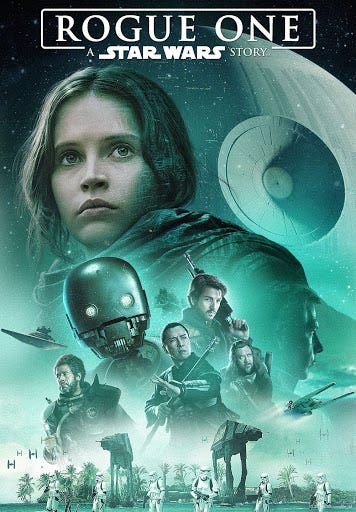
I do think that if anything the truth of this book’s genesis maybe lies in a little of both worlds of commercialisation and politics. I see a lot of ‘Star Wars: Rogue One’ to this story, the 2016 blockbuster prequel to the original ‘Star Wars’ universe that explains how the rebels got their hands on the plans of the Death Star in order to target its in-built vulnerabilities.

Rogue One: A Star Wars Story | List of Deaths Wiki | Fandom

Interestingly a big focus in that story, is on a young woman who is a reluctant fence-sitter at first but eventually comes around to the idea of rebellion. In fact, one of the most famous lines from the film is; "Rebellions are built on hope." 

Interestingly and just as with ‘Sunrise on the Reaping’, ‘Rogue One’ isn’t a kittens-and-rainbows happy-ending. It can’t be, because of what we know about what is to come in this universe and the story we’ve already been told. Schrödinger's cat is dead, so to speak, and we know that.

Much like Collins, it’s also a film that plays and pays fan-service, delightedly so.

It’s not surprising that ‘Rogue One’ is my favourite of the new Star Wars stories, and that I loved ‘Sunrise on the Reaping.’ Maybe for the same reasons, I loved them both; when you’re writing stories supporting just war theory and how messy revolutions can be, it’s not a bad thing to put a little sting in the tail and make them hurt, a little.

But I loved this. It resonated and moved me, and that's the Rorschach test that matters.

4/5

Wednesday, March 19, 2025

'The Insect Crisis: The Fall of the Tiny Empires That Run the World' by Oliver Milman


From the BLURB: 

How would we live if insects no longer existed? 

When is the last time you were stung by a wasp? Or were followed by a cloud of midges? Or saw a butterfly? All these normal occurrences are becoming much rarer. A groundswell of research suggests insect numbers are in serious decline all over the world - in some places by over 90%. 

The Insect Crisis explores this hidden emergency, arguing that its consequences could even rival climate change. We rely on insect pollination for the bulk of our agriculture, they are a prime food source for birds and fish, and they are a key strut holding up life on Earth, especially our own. 

In a compelling and entertaining investigation spanning the globe, Milman speaks to the scientists and entomologists studying this catastrophe and asks why these extraordinary creatures are disappearing. Part warning, part celebration of the incredible variety of insects, this book highlights why we need to wake up to this impending environmental disaster.

***

The Insect Crisis: The Fall of the Tiny Empires that Run the World by Oliver Milman is a nonfiction book that published in March 2022, and I listened to the audiobook narrated by Liam Gerrard.

An absolutely phenomenal read, about 'the plight of things that scuttle at our feet and hover in our gardens.'

I knew there was an insect crisis, but I didn't know how bad it was until this book. The one you hear the most about is the bee, and largely because its extinction affects human's access to honey and pretty pollinated flowers - and this is discussed in the book. The same way that the extinction of large and cute mammals (from polar-bears to pandas, koalas, and the world's last male northern white rhino that died in 2018) get good PR because there's a tangible face to put to their crisis ... insects and entomology struggle to rally support for their crisis that would have far greater and actual devastating impacts on humanity. Milman argues, the loss of the white rino - while tragic - doesn't have an impact on the daily-life of humans the same way that loss of many insect species would ... "You get rid of flies? You get rid of chocolate," said Erica McAlister, a senior curator at the Natural History Museum in London. Flies pollinate carrots, peppers, mangoes, many fruit trees and - chocolate. And they are hardier against cold-climates than bees.

Throughout the book Milman argues and highlights this crisis that is at once happening and devastating, and hard to quantify. "Counting the books while the library burns," is how he puts it - since there are anywhere from 5 to 10 million insect species in the world; impossible to study and catalogue, and therefore - unknowable when they die off ... he gives the example of the 2019 bushfires in Australia, where "billions of invertebrates were lost, with some models suggesting potentially trillions."

He does a brilliant job of quantifying the unquantifiable, like; a scientist in the jungles of Brazil who used to hang a white sheet in the rainforest and backlight it with a torch to show how many insects gathered (this is "manual collecting") and in the 70s these photos would show the sheet so blackened with many insects you couldn't even tell they were hanging on a backdrop ... but now? The sheet is clearly visible, only spotty with insects. The same way another citizen scientist used to drive his car down a certain stretch of road at night, and then photograph the insects splattered on the windshield; this manual collecting also harkens back to the "back in my day," crowd who can remember family road-trips that involved frequent pit-stops to clear the windshield of bugs ... not anymore.

Milman also does a good job of explaining the culprits to this crisis - humans, always humans. Monsanto and mono-farming culture (one entomologist suggests eliminating farms and just bolstering home gardens would do more for the environment and replenishing insects; and he's not wrong ... farms could help reverse damage they're doing by planting a border of wild flowers around all of their fields but - they won't, because most farms are corporate entities now, growing unsustainably for corporate greed.) Monsanto is a plight on humanity and the damage they've done is irreversible, alongside the greed and corruption within governments that allow them to run roughshod over the environment and the health of human-beings (Jair Bolsonaro in Brazil reversing laws against certain pesticide use has been catastrophic ... imagine what Trump is reversing too.)

And - what is lost when we lose insects? Their fine webbing of biodiversity, and tugging to break one thread will have a devastating domino-effect (just consider how many birds and mammals rely on insects for food-source) ... but more than that; imagine children growing up in a world, where they've never seen a butterfly (the monarch butterfly is expected to be on the brink in the next 30-years, it's happening and there's no stopping it).

'The tragedy will be how impoverished we will become, environmentally, spiritually, morally.' Or as entomologist David Wagner puts it; 'Our children will have a diminished world. That's what we are giving them.' Already in Australia, my nephews don't know what a Christmas beetle is; though they used to live in our households and gardens in the hotter months ... I used to find and rescue so many ladybugs as a child, carrying them to leaves on the tip of my finger - now, I can't remember the last time I saw one.

A diminished world indeed.

The audiobook is also *fabulous* - narrated by Liam Gerrard, who does a plethora of accents for all the entomologists quoted from all over the world (Australian, American, Brazilian, Chines ...) it really gave the book a feeling of; chorus of calamity.

5/5

Sunday, February 2, 2025

'Memorial Days' by Geraldine Brooks


From the BLURB: 

Many cultural and religious traditions expect those who are grieving to step away from the world. In contemporary life, we are more often met with red tape and to-do lists. This is exactly what happened to Geraldine Brooks when her partner of more than three decades, Tony Horwitz - just sixty years old and, to her knowledge, vigorous and healthy - collapsed and died on a Washington, DC street.
After spending their early years together in conflict zones as foreign correspondents, and living in Sydney, Geraldine and Tony settled down to raise two boys on Martha's Vineyard, Massachusetts. The life they built was one of meaningful work, good humour, and tenderness, as they spent their days writing and their evenings cooking family dinners or watching the sun set with friends. But all of this came to an abrupt end when, on the US Memorial Day public holiday of 2019, Geraldine received the phone call we all dread. The demands were immediate and many. Without space to grieve, the sudden loss became a yawning gulf.
Three years later, she booked a flight to remote Flinders Island off the coast of Tasmania with the intention of finally giving herself the time to mourn. In a shack on the island's pristine, rugged coast she often went days without seeing another person. There, she pondered the various ways in which cultures grieve, and what rituals of her own might help to rebuild a life around the void of Tony's death.
I have loved Geraldine Brooks for the longest time. 'The Year of Wonders' is one of my favourite books (read the summer I graduated high school, so I also can't think of that story without if being a demarcation of my life too). I read everything she writes with a hunger and particular pride in her being Australian ... 'Memorial Days,' about events following the sudden death of her husband (author, journalist and historian Tony Horwitz) and the grief she needed to meet on Flinders Island in Tasmania some years later, is no different.

This is also a book about creativity - since both Brooks and her husband were writers. In musing on his death, Brooks is also wondering at the person (the artist) she would have been, had she not followed her husband to America and instead stayed in Tasmania, to become a fully Australian writer (Brooks' work has instead been marked by interesting tales she's seemingly collected in her travels; the plague village of Eyam in England for 'Wonders', and FanFiction borne from Louisa May Alcott's very New England 'Little Women' in her Pulitzer Prize-winning 'March). 'Memorial Days' is a tale of a few deaths in this way; 'Sliding Doors' wonderings at who she would have been, and the death of an idea to write about Jane Franklin (a British explorer to Tasmania ... I admit a curiosity about this story, but also a thorough disgust when Brooks reveals things she did to an adopted daughter.)

In this respect, I was reminded of another memoir by an Australian writer about the death of her playwright husband; the extraordinary 'Love, Death & Other Scenes' by Nova Weetman which came out last year, and I also *adored* (and ugly-cried my way through). The deaths are markedly different; Tony Horwitz dropped suddenly on the street from a cardiac event, in the middle of his book-tour. Playwright Aidan Fennessy died a long and painful death from cancer at the heigh of Covid in Melbourne lockdown. But both of these books also examine the audacities of bureaucracy in death; for Brooks it's navigating a callous and needlessly cruel American healthcare (and health insurance) system. For Nova Weetman, it was the aforementioned Covid adding layers of delay and complication to their memorials and grieving. In both I found connection to the writings of Caitlin Doughty, an American mortician and author who is a passionate advocate for things like green burial, but also for a more personal relationship with death and dying that the West seems uniquely inadequate at - for the ways medical and healthcare systems insist on distance and sanitising what should be a deeply personal and close experience, should loved ones require it.

Brooks' writing goes down like a robust glass of red in the reading ... her descriptions of the Flinders Island landscape are particularly delicious, cast against her unstable tripping towards some kind of marker for the other side of grief.

I was so deeply moved by this, as many will be, for thinking of people I've lost in my own life too - and how true Brooks' recommendations are, to aid the chores of death (little things like people making lists of all they do; what their passwords are, where the number for the plumber is kept, etc.) She is correct that death and dying bind all of us, and so I think everyone will find something to hurt or heal in this remarkable book.

And much like Brooks, I find it cruelly ironic that America is entering into this new wave of Trumpism fascism and Tony Horwitz - a journalist uniquely situated to report and comment on it! - isn't here to do so. I really do want to go and read his books 'Confederates in the Attic' and 'Spying on the South' now, and I think that's a gift Brooks has also given to readers and his legacy.

5/5


Wednesday, December 18, 2024

'The Silver Metal Lover' by Tanith Lee


From the BLURB: 

For sixteen-year-old Jane, life is a mystery she despairs of ever mastering. She and her friends are the idle, pampered children of the privileged class, living in luxury on an Earth remade by natural disaster. Until Jane's life is changed forever by a chance encounter with a robot minstrel with auburn hair and silver skin, whose songs ignite in her a desperate and inexplicable passion. Jane is certain that Silver is more than just a machine built to please. And she will give up everything to prove it. So she escapes into the city's violent, decaying slums to embrace a love bordering on madness. Or is it something more Has Jane glimpsed in Silver something no one else has dared to see - not even the robot or his creators A love so perfect it must be destroyed, for no human could ever compete


I don't quite know how I stumbled across this book (first published in 1981) I think I was led here by wanting to read more science-fiction with romantic elements (to try and read more sci-fi generally) coupled with a reminder of the hilariously prophetic old article from The Sun REVEALED: Women will be having more sex with ROBOTS than men by 2025 and also thinking about AI encroachment on artistic spaces.


Enter; Tanith Lee (whom I'd never read before) and 'The Silver Metal Lover' about a 16-year-old girl narrating the story of how she fell in love with the humanoid musician robot S.I.L.V.E.R. (which stands for 'Silver Ionized Locomotive Verisimulated Electronic Robot').

I really loved this, even as it broke my heart. And for a novel written in 1981 it made so many prescient points, particularly about the wisdom of letting young people have "artificial" relationships in lieu of real experiences (not that I think Tanith Lee villainises this most modern of ways to experience love, mind you! She makes a lot of swipes at other artifices we encourage in society to do with beauty-standards, and it makes you question where the line on "real" really lands).

There's also just some *amazing* lines in here. And again, for a pre-smart phone and social media 1981 novel a line like; “… she pours her life like champagne through your video phone.” seriously slays!

While reading this, it also struck me that a parallel for AI and robots that Lee was exploring here was the tale of Djinn and genies - subservient to human masters, human-but-not, inciting paranoia for trickster behaviour ... and humans constantly questioning their autonomy and the ethics of ordering them around. Brilliant!

This is still an 80's not-quite-YA-but-YA-according-to-the-80's novel so it's sometimes a little too flourish-y. Purple prose-y? The protagonist - Jane - is sometimes soooooo over-the-top and soap-opera dramatic, it felt like a very 80's perspective that teens are a little bratty and tragic and hormonal. To the point of high annoyance, which is unfortunate.

But overall I thought this was a very beautiful sci-fi fairytale, and it did exactly what I hoped it would which was get me thinking about the aspects of modernity and society I'd like to further explore in more science-fiction narratives.

4/5

Saturday, September 28, 2024

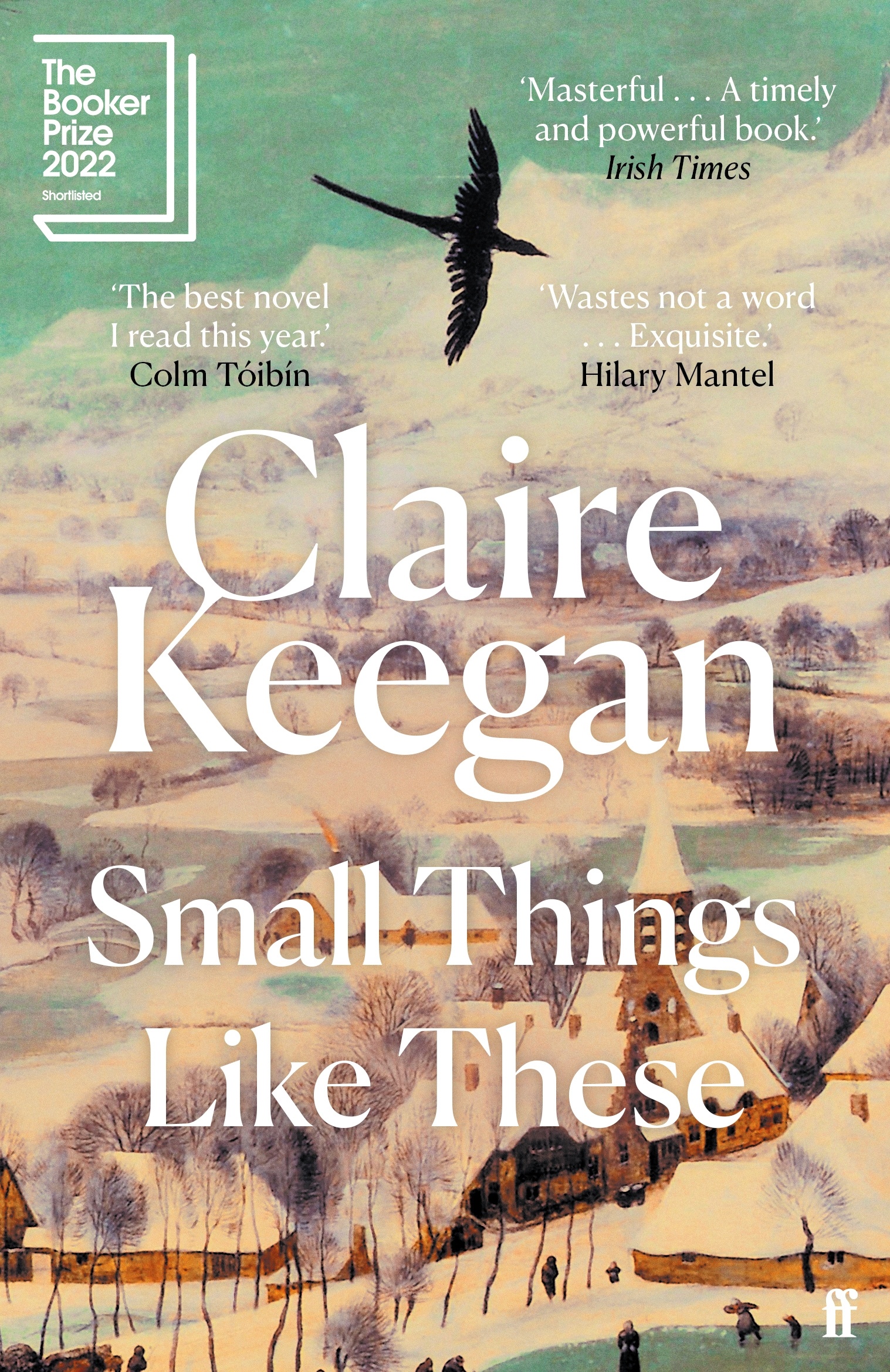
'Small Things Like These' by Claire Keegan


Claire Keegan's 'Small Things Like These' is a powerful novel of 110-pages, about to be stretched into a movie adaptation starring Cillian Murphy.

I got this book for myself in lockdown - some time in 2021 - but didn't crack it open until today, to help pull myself out of a reading slump and concentration-shortage. Keegan helped me on both fronts; but she also sharpened my senses reading this one, giving me a bone-deep pleasure that comes from a perfect book that nuzzles itself into your side, at just the right time.

Ostensibly this is the story of an Irish coalman in his early 40s in 1985, as Christmas day approaches and he catches himself pondering deep thoughts and idly imagining a different life for himself ... amidst memories of his long-dead teenage mother, his unknown father, and the world of men that await his five young daughters.

Whilst this is happening, he goes to the Convent on three separate occasions to deliver coal, and encounters "fallen women" - girls - who beg him for escape. His wife warns him to stay on the right side of people, and a local businesswoman reminds him that "they" - the Church - have a hand in everything.

And yet. Furlong keeps thinking about them, and his own life - how different it would have been, had his mother ended up in a place like that with him, or without.

As they carried on along and met more people Furlong did and did not know, he found himself asking was there any point in being alive without helping one another? Was it possible to carry on along through all the years, the decades, through an entire life, without once being brave enough to go against what was there and yet call yourself a Christian, and face yourself in the mirror?


This is Keegan writing about the Magdalene Laundries in Ireland, and the long arm of Roman Catholic orders ... though; for all of Furlong's deepening thoughts about the point and purpose of life, and what it takes to be a good person, you can read many a substitute in Keegan's novel, for the abuse of women.

Keegan's is at once a scathing critique of the vast network of church-and-state institutions that perpetuated violence and brutality in Ireland, and even without going into the mechanics, she makes clear how the Catholic church kept a colonial hand in Ireland's formation. But this story is also a meditation on what we do with our time; how we spend a life.

Before long, he caught a hold of himself and concluded that nothing ever did happen again; to each was given days and chances which wouldn't come back around. And wasn't it sweet to be where you were and let it remind you of the past for once, despite the upset, instead of always looking on into the mechanics of the days and the trouble ahead, which might never come.


Furlong is contrasted against his wife; a woman who grew up with both her parents and wants to keep a similar order in her own world now, and for their own five girls in the future. Furlong's musings about what goes on at the convent, and the girls he has encountered there, turn her into a Lady Macbeth-type, bemoaning a damned spot of thought.

'Where does thinking get us?' she said. 'All thinking does is bring you down.' She was touching the little pearly buttons on her nightdress, agitated. 'If you want to get on in life, there's things you have to ignore, so you can keep on.'


That Furlong is a colaman conjures the Dickensian character of Ebenezer Scrooge, who permits his clerk - Bob Cratchit - one coal for a fire. Furlong's persistent memories too, of a childhood raised in a stately home where his teenage mother was servant but also permitted to raise her child out of wedlock, have a touch of the 1946 classic 'It's a Wonderful Life' for how George Bailey looks backwards and forwards on his life and all its turning points. Nothing Keegan does is by accident; her sentences are sharp, the thoughts cutting, and her decision to set this as a Christmas tale is especially clever ... after all; what better time of year to contemplate the good and bad of people, to reach for our higher-selves?

This novel was extraordinary. Keegan does more with a mere 110-pages than some authors will in their lifetime, and you cannot help but feel you are in the presence of greatness with every page-turn.

5/5


Monday, August 12, 2024

'Slow Dance' by Rainbow Rowell


Received from the publisher is return for an honest review 

From the BLURB: 

Everybody thought Shiloh and Cary would end up together – everybody but Shiloh and Cary.

‘Slow Dance’ follows these star-crossed best friends from their inseparable teen years on the wrong side of the tracks to their far-flung adulthoods – through her marriage and motherhood and his time in the Navy – as they try to work out what they’re actually supposed to be to each other.

🪩

I was up until midnight finishing this; laughing, crying, and just having the best reading experience. I have always loved Rainbow Rowell’s adult fiction - ‘Attachments’ has been my No. 1 fave … but ‘Slow Dance’ maybe just knocked it down to No. 2.

I remember in ‘Attachments’ there was a lot of love for the 1977 movie ‘The Goodbye Girl’ - which is arguably all about another chance of romance when you think you’re down and out and nobody could possibly want you any more … and I feel like ‘Slow Dance’ is a bit of a homage to that time in life. Where so few romance novels choose to expand; Rainbow Rowell dares to tread. 

For anyone who just discovered David Nicholl’s ‘One Day’ via the new adaptation (and now you need to mend what he beautifully broke) - Slow Dance will be right up your alley. Swap out University of Edinburgh for Omaha, Nebraska - and meet Cary & Shiloh bouncing between 1991 and 2006. Where so few romance novels choose to expand on the missed loves and those that remained unrequited for so long, Rainbow Rowell bursts open this idea of approaching your mid-30s and being full of regret and “what if’s?” and choosing to explore new (old) love anyway.

And she does it with her usual Rainbow Rowell sparkling repartee and dialogue … and the most impressive ability to make characters you’ve just met feel so beloved and lived-in.

I adored ‘Slow Dance’ … it is a slow burn - that’s kinda the whole point and plot - and I feel like some people won’t appreciate how lovely it is to have a book like this. It has the hard edges of life amongst a really tender romance. But I thought it was spectacular. One of my favourite reads from Rowell and for the year.

‘Do you think that makes us strangers?’
‘No,’ Shiloh said. ‘But also, yes? Like - cells get replaced in the human body every seven years so that’s two full iterations since 1992. You don’t have any cells left that remember me.’
‘I’m pretty sure my cells remember you, Shiloh.’


5/5 

Friday, August 9, 2024

'The Five: The Untold Lives of the Women Killed by Jack the Ripper' by Hallie Rubenhold


From the BLURB: 

Polly, Annie, Elizabeth, Catherine and Mary-Jane are famous for the same thing, though they never met.

They came from Fleet Street, Knightsbridge, Wolverhampton, Sweden and Wales. They wrote ballads, ran coffee houses, lived on country estates, they breathed ink-dust from printing presses and escaped people-traffickers. 

What they had in common was the year of their murders: 1888. 

Their murderer was never identified, but the name created for him by the press has become far more famous than any of these five women. 

Now, in this devastating narrative of five lives, historian Hallie Rubenhold finally sets the record straight, and gives these women back their stories. 


The Five: The Untold Lives of the Women Killed by Jack the Ripper by Hallie Rubenhold, read on audiobook by Louise Brealey. 

“Poor women were expendable …”

I listened to the audiobook of this, via my library's BorrowBox app - even though I've also owned the B-format paperback since about 2020, I could just never bring myself (or my heart) to pick it  up and read it of my own volition, but on audiobook I tore through it. And under the talent of Brealey's narration, who could bring out various regional accents to really help things along - it was superb. 

This was such a tough listen but I’m really really glad that I finished this book and I found it to be an extraordinary non-fiction work and by far one of the best non-fiction books I’ve read in a long time. 

I was completely upended, however to discover that this book has pissed off so many people and specifically “Ripperologists” to the point that Hallie Rubenhold has been horribly abused and harassed because she did to research into the canonical five victims of Jack the Ripper - and put fourth credible evidence that not all of them were prostitutes as the sick lore of this madman murdering spree dictated for so long. 

Her book is a gracious and human examination of what it meant to be a woman in the 1880s and the impossible position that they were put in to either be Madonna or whore. She digs into the Victorian mindset of the time that insisted that their murders had to somehow be prescriptive to the wider public and so they were painted as Scarlet women. Their stories absolutely broke my heart and patterns did emerge in all of them — domestic violence, alcoholism (if only to have some alleviation from the drudgery of being a woman at the time) …  the way people were kept impoverished and women in particular who had to bear the burden of childbirth and child rearing. Lack of education being the lightning rod overarching issue for so many people of this time. Just an incredible historical examination of everything never said about these women that I found to be so touching and crucial.

As I was reading, I was repeatedly struck by the realisation of how true it is now - just as it was in 1888 - that all it takes is a bad bout of luck, illness or injury for any one of us to experience houselessness and our fate to be completely undone. I thought that about each of these women at so many points in their life as Hallie unpicked them for us ... and my god, did my heart go out to them - across space and time. 

The very final chapter in the book is the Author listing all of the items found on four of the victims upon their death; in one of their pockets was one red mitten — and that visual is just touching and heartbreaking, as was the entire book.

5/5

Sunday, July 21, 2024

'The Ministry of Time' by Kaliane Bradley


From the BLURB: 

A BOY MEETS A GIRL. THE PAST MEETS THE FUTURE. A FINGER MEETS A TRIGGER. THE BEGINNING MEETS THE END. ENGLAND IS FOREVER. ENGLAND MUST FALL. 

In the near future, a disaffected civil servant is offered a lucrative job in a mysterious new government ministry gathering 'expats' from across history to test the limits of time-travel. 

Her role is to work as a 'bridge': living with, assisting and monitoring the expat known as '1847' - Commander Graham Gore. As far as history is concerned, Commander Gore died on Sir John Franklin's doomed expedition to the Arctic, so he's a little disoriented to find himself alive and surrounded by outlandish concepts such as 'washing machine', 'Spotify' and 'the collapse of the British Empire'. With an appetite for discovery and a seven-a-day cigarette habit, he soon adjusts; and during a long, sultry summer he and his bridge move from awkwardness to genuine friendship, to something more. 

But as the true shape of the project that brought them together begins to emerge, Gore and the bridge are forced to confront their past choices and imagined futures. Can love triumph over the structures and histories that have shaped them? And how do you defy history when history is living in your house?

'The Ministry of Time' is the debut novel from British-Cambodian writer and editor based in London, Kaliane Bradley. 

So, this may well be my favourite book of 2024. WOW-ee. What an enjoyable read, especially for a low-science fiction girly whose particular proclivity is time-travel tales (those are always my fave 'Doctor Who' episodes, the back-in-time ones). So, some random observations; 

⦿ I am very fond of 2005 YA novel 'The White Darkness' by Geraldine McCaughrean, which is about a teenage girl who is genuinely in love with (the long-dead) Captain Lawrence 'Titus' Oates from the doomed Terra Nova Expedition. So when I read the blurb for 'The Ministry of Time' about Britain having harnessed time-travel and successfully bought six travellers from various eras to the modern-day, including Commander Graham Gore from the doomed Franklin expedition - I was all in. *Especially* when the blurb hinted that Gore's present-day "bridge" - the protagonist of the novel who is tasked with helping him acclimatise and who maybe starts to develop feelings - I was *ALL IN*. 


⦿ Time-travel has always been my bag. Modern-day women falling for out-of-time men is my particular favourite sub-genre ... I know exactly when this started; 'Playing Beatie Bow' by Ruth Park, and the time-travelling Abigail falling for Judah in the 1800's. This was particularly cemented when I read 'Outlander' by Diana Gabaldon as an 18-year-old; WWII army-nurse Claire passing through the stones to Jamie Fraser in the 18th century. No doubt there's some Marty McFly 'Back to the Future' Michael J. Fox appreciation thrown in there too. But this sub-genre of sci-fi and time-travel is my jamboree. And 'The Ministry of Time' gave it to me in HEAPINGS of timey-wimey goodness. The romance is slow-burn but makes up for it because our protagonist (whose name we don't know, but we get an intimate first-person account from) crushes HARD on Gore and that amps up the burn. But I was also very sucked into the mechanics and politics of the time-travel itself, so it wasn't like I was ever cooling my heels and checking my watch for the low sci-fi to get good ... it was ALL good. 

⦿ The politics of time-travel in this book reminded me of the Norwegian sci-fi series 'Beforeigners', about people from different time-periods suddenly randomly appearing in Oslo, becoming refugees of time that the Norwegian government has to deal with. It's also a little bit like the (brilliant) Aussie TV series 'Glitch' set in a small outback town where; 'Seven people from different time-periods return from the dead with no memory and attempt to unveil what brought them to the grave in the first place.' I like this connection in particular because there's a shady organisation linked to the raising of the dead, a big-pharma laboratory called "Noregard" (best in-universe name for a corporation, ever.) It's also a wee bit like the 2001 rom-com starring Hugh Jackman and Meg Ryan, 'Kate & Leopold' about an English Duke from 1876 falling for a modern-day New Yorker when he's unceremoniously dragged into the future. If any/all of those recs are your picnic; this book is for you. 


⦿ He filled the room like a horizon ... the writing was sumptuous, and gorgeous at times. Sometimes Bradley had a turn-of-phrase of description that made me go "ohhhhh." When something changes you constitutionally, you say: ‘the earth moved,’ but the earth stays the same. It’s your relationship with the ground that shifts. 

⦿ I actually first heard about this book, in a Guardian round-up of British debuts to look out for, and the description of Kaliane Bradley's idea made my spine sizzle and then I Googled her even more and found that she partly wrote the idea for 'The Ministry of Time' during Covid and lockdowns and because she kinda fell in love with the only photograph of Graham Gore. No, really. 'Kaliane Bradley Fell in Love With a Dead Man. The Result Is The Ministry of Time' ... if that's not an *amazing* sales-pitch I don't know what is. 


⦿ I just loved this. It's extremely cinematic and I wouldn't be surprised to find it is being developed into a movie or limited-TV series. It both feels appropriately head-nodding to plenty of other fabulous low-sci-fi time-travel that will make aficionados happy, but also sparkly-unique enough to keep adding to the conversation about the space-time continuum. Even if I guessed the small twist that comes, I did so because I know this sub-genre so well and expected certain markers along the way and Bradley did not disappoint. I loved this so much, I was only one-chapter in when I knew it'd give me the best bookish hangover and be hard book to follow-up, probably throwing me into a reading-rut.

5/5

Wednesday, April 10, 2024

'Love, Death & Other Scenes' by Nova Weetman


From the BLURB: 

Nova Weetman’s unforgettable memoir reflects on experiences of love and loss from throughout her life, including: losing her beloved partner, playwright Aidan Fennessy, during the 2020 Covid lockdown; the death of her mother ten years earlier; her daughter turning eighteen and finishing school; and her own physical ageing. Using these events as a lens, Nova considers how various kinds of losses – and the complicated love they represent – change us and can become the catalysts for letting go.

This is a moving, honest account of farewelling a partner of twenty-five years, parenting teenagers through grief, buying property for the first time at the age of fifty, watching Aidan live on through his plays, and learning to appreciate spending hours alone with only the household cat for company. Warm and wise – and often joyful – Love, Death & Other Scenes ultimately focuses on the living we do after losses and what we learn from them.


At one point while reading Nova Weetman's memoir, I said out loud to the empty room; "Geez, you're good Nova."

Such was the power and force of certain sentences, ideas, inflections and offerings throughout. "As writers, we are stealers of other peoples memories, bowerbirds of story," she writes at one point - and then puts that ability to collect on full display throughout as she recounts the life she built with her partner, playwright Aidan Fennessy, who battled and then died from prostate cancer in 2020 during Melbourne's numerous lockdowns and waves of Covid.

I know Nova as a colleague, a fellow middle-grade author and someone I greatly admire, and whose books I truly - hand on heart - believe helped me in tapping into my own voice for this age group. I think it's a little odd that I feel like I know-her, *know* her now after reading 'Love, Death & Other Scenes,' though. And especially because I have a tangential understanding of the loss she and her two children experienced in 2020. My uncle died after his third bout of cancer - having beat the other two, it was pancreatic in the end, third time unlucky - and unlike Nova's partner who had the option but didn't use it; my uncle chose Voluntary Assisted Dying and went out on his own terms, at home, December 2020. We were all there. I'm both surprised and not at all by how much reading Nova's perspective of a death like that during Covid - which I watched my aunt and cousin go through, one of the helpers minding children and looking for ways to ease their pain - I needed to reexamine and feel.

But I'm also surprised at how beautifully romantic this book was too, as Nova writes about how she and Aidan first met - how she fell first, and pursued ... how so much of their relationship felt like it needed balancing, especially in their creative exchange; ‘He introduced me to albums I’d never heard, to singers dead before my time, and the way that songs stain your memories giving them meaning they don’t have in silence.'

In this too, I feel weirdly intimate to the story because Nova writes about Aidan's final play he ever wrote - 'The Heartbreak Choir' - finally being staged, but only after his death. His final work he never got to see fully-realised. It's because I know Nova and am a fan of hers, that I was aware through social media what she was going through - and when tickets became available for 'The Heartbreak Choir' debut performance in Melbourne, I snapped them up for both myself, my mum, and my aunt - also knowing that she in particular may find some comfort in both the story, and its background. And she did - we all did. I saw 'The Heartbreak Choir' in May 2022 and loved it! A play my Aunt still talks about, has triggered her love of theatre to the point that she and my mum will now spontaneously ask me to check out what's on and what's coming up, book something for us all.

'Love, Death & Other Scenes' feels like another chapter to that play, in a way. How apt, that Nova muses towards the end of her memoir; ‘And it is in words that I can find him,' and it's in both her words and his that I feel something being unlocked, and another story I want to share with my family. That I want to press this book into their hands and say; 'It's us, a little bit.' We're not so alone, I think.


5/5

Monday, March 4, 2024

'Unruly: A History of England's Kings and Queens' audiobook read by author, David Mitchell


From the BLURB: 

A seriously FUNNY, seriously CLEVER history of our early kings and queens by one of our favourite comedians and cultural commentators.

This will be the most refreshing, entertaining history of England you'll have ever read.

Certainly, the funniest.

Because David Mitchell will explain how it is not all names, dates or ungraspable historical headwinds, but instead show how it's really just a bunch of random stuff that happened with a few lucky bastards ending up on top. Some of these bastards were quite strange, but they were in charge, so we quite literally lived, and often still live, by their rules.

It's a great story. And it's our story. If you want to know who we are in modern Britain, you need to read this book.

 ♛  

This just *delighted* me and had me running to find any other audiobooks of David Mitchell's on my Library's BorrowBox app (and yes, I am forever disappointed when somebody says "David Mitchell" and means the bloke who wrote Cloud Atlas. I want 'Peep Show' David Mitchell, 'Upstart Crow' David Mitchell - and this book proves why!)

I listened to this while I walked the dog, and I must have looked like a King George III-level maniac laughing and guffawing as I picked up his poo (with a bag) and walked blithely along, nodding and laugh/crying ... but it was truly just *that* good!

David Mitchell's injections and rants are next-level (at one point he manages to tie in the absurdity of awards for art; like the year that the theme song for 'Shaft' was up against 'The Age of Not Believing' from 'Bedknobs and Broomsticks' for best song at the Oscars, to which he says you may as well compare a fish-finger to a ladder for all the good it does to categorise and quantify two pieces of art like that ... and he's not wrong!)

Mitchell only takes the book up to King James-ish because he says that was the last time that monarchy had true, absolute power before Parliament, Prime Ministers, foreign Governments and such started interfering with what the royals had bamboozled England into thinking was "divine rule," ... I do hope he decides to write a second-book about the waning royals (is it too much to ask that he give a full-throated debate on why a Republic would be better? Throughout the listening of this I could feel his tension to rein in what could have been an 11-hour long rant on the subject!)

As such, this was perhaps the most enjoyable new read I've encountered this year so far. Amazing!

5/5

Sunday, January 21, 2024

'Witch of Wild Things' by Raquel Vasquez Gilliland


From the BLURB: 

Legend goes that long ago a Flores woman offended the old gods, and their family was cursed as a result. Now, every woman born to the family has a touch of magic. 

Sage Flores has been running from her family—and their “gifts”—ever since her younger sister Sky died. Eight years later, Sage reluctantly returns to her hometown. Like slipping into an old, comforting sweater, Sage takes back her job at Cranberry Rose Company and uses her ability to communicate with plants to discover unusual heritage specimens in the surrounding lands. 

What should be a simple task is complicated by her partner in botany sleuthing: Tennessee Reyes. He broke her heart in high school, and she never fully recovered. Working together is reminding her of all their past tender, genuine moments—and new feelings for this mature sexy man are starting to take root in her heart. 

With rare plants to find, a dead sister who keeps bringing her coffee, and another sister whose anger fills the sky with lightning, Sage doesn’t have time for romance. But being with Tenn is like standing in the middle of a field on the cusp of a summer thunderstorm—supercharged and inevitable.

I am a seasonal reader, and that’s a very hard thing to be in Melbourne at the moment where we’re swinging between heatwaves and downpours. So I find it interesting that in a bit of a reading slump, I randomly decided to reach for a witchy book that includes a character whose mood can change the weather … 

This is my first read by Gilliland - and it’s her third book, but first adult romance. Her second YA book - ‘How Moon Fuentez Fell in Love with the Universe’ - won and was shortlisted for a slew of awards, and was already on my radar. But TikTok actually put me onto ‘Witch of Wild Things’ - about a Mexican woman who returns to her hometown where her dead sister haunts her, another curses her, and the boy who made her swoon over AOL until he broke her heart has grown into a hot man with forearm tattoos.

The fact that we come from dirt, and eventually turn to dirt, is spooky and incredible to think about it at the same time. My sister is dirt by now, surely. All of our ancestors are, too. This must make dirt holy, holy enough for the old gods to walk upon it from time to time. Holy enough that Nadia gives it a little cup of espresso to drink every single morning.

 I’m so glad I started with this book because it *hit the spot* - was lovely and spicy, but also made me weepy and tender-hearted. Our protagonist Sage has a particular story-arc about being the oldest sibling to her two sisters, and defaulting to a parental responsibility role that’s so rarely explored in fiction like this … imagine Luisa Madrigal’s ‘Surface Pressure’ song from ENCANTO, made into a novel. 

It’s also very ‘Practical Magic’ by Alice Hoffman (BUT - it’s actually more of the 1998 Sandra Bullock/Nicole Kidman classic movie ‘Practical Magic,’ with its cottagecore-comfy and whimsy, whereas the book is … not? It’s darker. So if you prefer movie ‘Practical Magic’ then *this* is the book for you … not the actual Hoffman book, FYI and lol) 

You can *kinda* tell that this book struggled to find a strong plot, however. And Gilliland hints at this in her acknowledgements, where she talks about a severe bout of writer's block from which this story was borne, from the scraps of an abandoned and unworkable idea. It does have a little bit of that feeling, like; she was immersed in this town and this family, the universe, and an actual strong through-line of story had to be somewhat shoehorned in. 

So while I loved this - I maybe would have liked a few threads to be more deeply explored and wrapped up, and *maybe* it got slightly too easy by the end … but those are minor quibbles in an otherwise very sparkly and lovely book.

4/5

Tuesday, January 16, 2024

'Everyone and Everything' by Nadine J. Cohen


From the BLURB: 

When Yael Silver’s world comes crashing down, she looks to the past for answers and finds solace in surprising places. An unconventional new friendship, a seaside safe space and an unsettling amount of dairy help her to heal, as she wrestles with her demons – and some truly terrible erotic literature. 

Funny and tender, Everyone and Everything is about friendship, grief and the deep, frustrating bond between sisters. It asks what makes us who we are and what leads us onto ledges. Perfect for fans of Meg Mason, Nora Ephron and Victoria Hannan, this is an intimate, wry and wise exploration of one woman’s journey to the brink and back.

---

'Everyone and Everything' is the 2023 debut by Australian author, Nadine J. Cohen - from Pantera Press.

I've just come off an absolute roll with a certain type of new (millennial?) women's fiction. I've been calling it 'Fleabag'-esque. I don't like the term "well-dressed and distressed," for how some of the covers are often stylised - but I'd take "Women's Fiction with Bite." So I was in a bookshop the other day with a legit legend bookseller (Jaci from Hill of Content) who knows I have devoured 'Crushing' by Genevieve Novak, 'A Light in the Dark' by Allee Richards,' and 'Search History' by Amy Taylor ... when we were browsing the shelves and she just gently placed Nadine J. Cohen's debut into my hands and said; "Trust me," and reader - she was right. 

This is the story of Yael Silver who joined the 'orphan's club,' far too young, and when the book begins has just made an unsuccessful attempt to end her life because of her latent grief over the deaths of both her parents and Nanna, an f-boy who emotionally wrecked and ghosted her and a general feeling like she's become a burden to her older sister, Liora. 

Yael is on a long and slow pathway to recovery that largely begins in earnest when she starts regularly visiting the McIver's Ladies Baths in Coogee - perched on a cliff-face and offering her a scenic place to cry and read bad erotic fiction in peace. Until she meets older woman Shirley and they form an odd and healing friendship. 

At one point Liora asks Yael; 'Is that what it's like in your head all the time?' after she shares another random and disturbing thought, to which Yael replies; 'Yup.' And this is essentially the book, too. Chapters are broken down by months spanning a whole year, but they're made up of almost vignette fragments; wisps of memory and tangents (sometimes deeply emotional, recounting her childhood or the lead-up and come-down of her Nanna, mother and father's deaths - other times pop-culture heavy; "Pacey Witter cures all ills.") It's all cogent, I must stress, and brilliantly done for reading like a patchwork of a healing mind, and the memory-squares amounting to so much insight as to who Yael is as a person. She's deeply funny and relatable (from Cher Horowitz praise to 'Gilmore Girls' marathons, she reads like a friend) but also very broken and fragile, and I found myself both smiling and crying in equal measure. 

Jewish identity is also tenderly touched on in this book in a way that I really don't feel like I've read much in contemporary Australian fiction. Like how Yael looks back on her Nanna, mother and father's mental states at various times in their lives - how she retrospectively wonders what her grandparents being Holocaust survivors must have done to those lines of generational trauma;

I think about her often fraught relationship with mum, who, like all children of survivors, grew up with irrevocably damaged parents, and six million ghosts. 

... and musing on how comfortable Jewish people are with death, compared to gentiles. 

I absolutely adored this book. It wasn't easy, but it was beautifully wrought and Yael was a fine companion.

5/5

| More