Search This Blog

Wednesday, February 11, 2015

'The Flywheel' by Erin Gough


I interviewed Erin for my Kill Your Darlings article, ‘We Read To Know We Are Not Alone: Examining the Lack of LGBTQI Characters in Australian Youth Literature'She’s amazing, and this debut YA is a triumph: I should know, because I was given an advanced copy … and I’d like to share with you the endorsement quote I wrote for the book: 

Erin Gough writes lightning on the page - her words leaving a resounding thunderclap in the heart! I wished so hard for The Flywheel to be a real place, so I could go there and knock back caramel milkshakes with Del and Charlie while we waited for the Flamenco Hour. This reads like progress in Aussie YA diversity, a move away from coming-out stories to explorations of the perils and pleasures that come when you are finally true to yourself, but still dealing with the small-minds of others. I do think that the Australian youth literature community will embrace this tender-true story of girl meets girl, falling in love and finding your feet. I eagerly anticipate Gough’s next novel.

(see how I rambled there? That’s because it’s awesome and WORDS CANNOT EXPRESS!)


Monday, February 9, 2015

Starting a new relationship after intimate-partner violence


My freelance writing is normally about youth literature, pop-culture, and how these topics sometimes intersect with feminism. 

Today, Daily Life has published a piece of mine that hits a little closer to home.  


With much love to my aunt and uncle. 

Friday, February 6, 2015

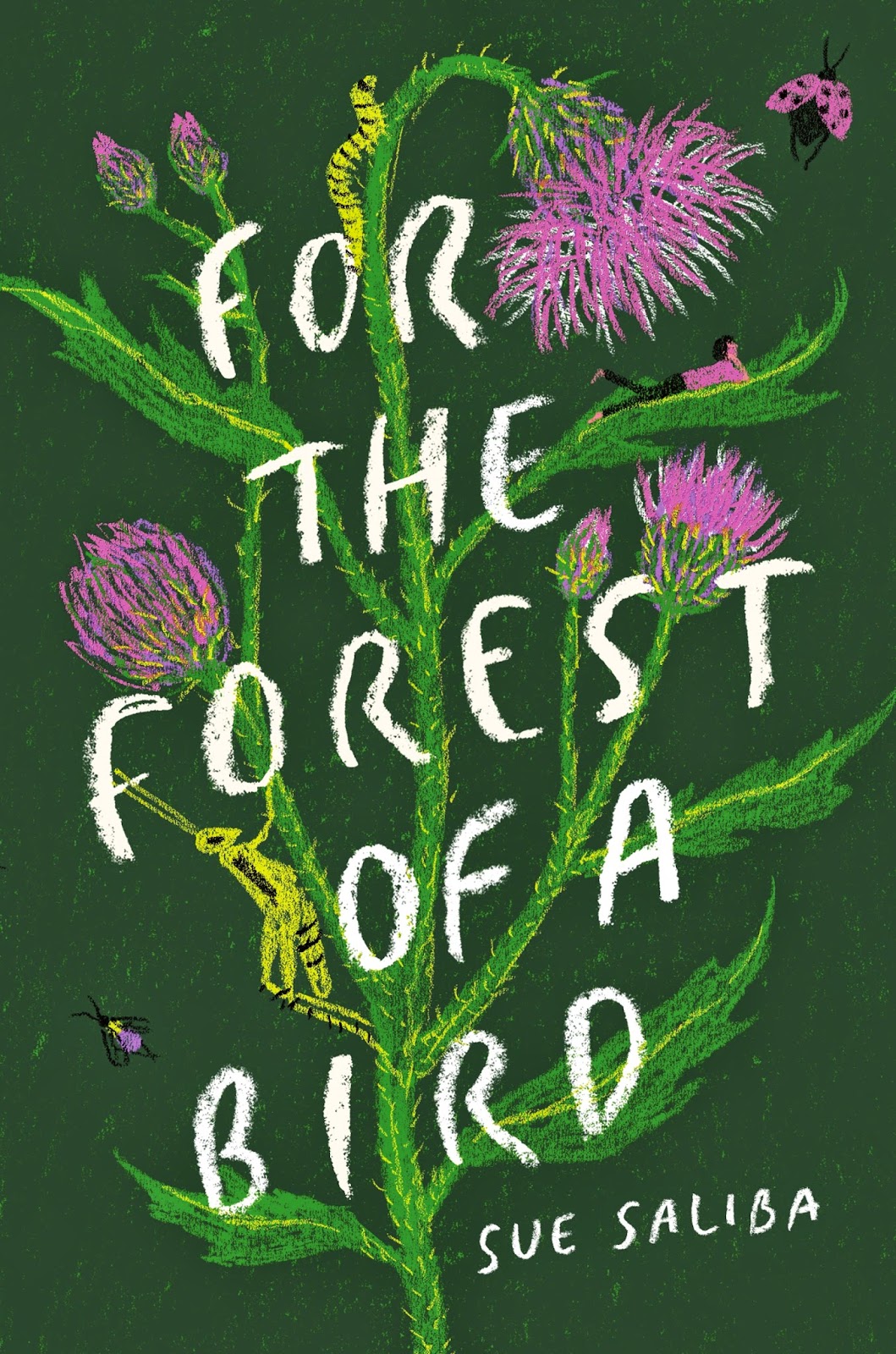
'For the Forest of a Bird' by Sue Saliba

Received from the Publisher

From the BLURB:

A novel about love and the things you can and can't change, from the winner of the Victorian Premier's Literary Award for young adult fiction, Sue Saliba.

'I want to tell you that he's coming home. . . and it's going to be like it was before he went away, before everything broke apart.'

Nella waits for the swallows by the creek each spring. It's a secret vigil she's followed ever since her father left.

This year she's going to take him with her . . . but can we ever return to the way things were?

A novel about love and the things you can and can't change, from the winner of the Victorian's Premier's Literary Award for young adult fiction.

For the Forest of a Bird is the new young adult novel from Australian author, Sue Saliba.

Nella is fifteen and lives in North Fitzroy ‘with its asphalt footpaths and bluestone gutters.’ Ever since her parents divorced, her mother has ‘shrunk smaller and smaller,’ while Nella and her brother Matthew have struggled to cope in their father’s absence.

When tragedy strikes, Nella has an idea to get her father back, but is not prepared for what she finds as the plan unfolds …

‘I must be braver,’ she said. And she stepped away from the bedroom door and thought again of her father. It wasn’t just a sense of safety she felt when she was with him, it wasn’t just a sense of protection. He made her feel brave, that was it. He made her feel courageous. She was like a bird who could take on the stormiest of winds, could soar in the wildest of skies because she knew he was with her, because she knew he would never let her fall.

Sue Saliba is a YA author unlike any other writing today. Her novels play with language and form in such a beautiful way, as anyone who read her 2011 novel Alaska will know. For the Forest of a Bird is told in third-person but still reads like a stream of consciousness, granting readers a tenderly honest portrayal of Nella’s life and private worries. We learn that her mother is mentally ill, and struggles with her illness go some ways to explaining her parent’s divorce – there were issues with her mother not taking medication, police had been called in the past and she’d been in hospital. Her brother Matthew seems to know more about the divorce, and the idea of their father confiding in him over her adds to Nella’s woes.

When Nella travels to Phillip Island, where her father moved after he left (and where author Sue Saliba lives) she discovers the new life he has carved for himself. This aspect of the book reminded me of a beloved John Steinbeck quote; ‘When a child first catches adults out…’ as Nella is forced to confront everything she thought she always knew about her family.

Nella goes through so many emotional upheavals in this novel, but they’re beautifully balanced and grounded by her connection to earthier things. Phillip Island is clearly a source of inspiration for Saliba, and she beautifully describes the surrounds. A scene concerning an injured wallaby is particularly haunting, and it’s in writing about nature – particularly its juxtaposition to Nella’s concrete suburb – that Saliba’s writing glows;

Nella had read that the last of the bandicoots had disappeared from the island years earlier. It made her think of her home in Melbourne, of the cobblestone laneways of North Fitzroy and the thistled banks of the creek where she had sensed the presence of long-gone platypuses, of eagles and owls and the strangest of butterflies, disappearing before they could be named.

Everybody should discover Sue Saliba. Her novels are such special things – they make you think differently and laterally about language and form, her young characters deal with such heavy emotions but are lightened by their connection to nature and family. For the Forest of a Bird is another beautiful outing by this superb Australian author  I loved it, and ate up the words in one afternoon. .

5/5

Sunday, February 1, 2015

'What Alice Forgot' by Liane Moriarty


From the BLURB:

When Alice Love surfaces from a strange dream to find she's been injured in a gym, her first concern is for her unborn baby. She's desperate to see her husband, Nick, who she knows will be worried about her.

But Alice isn't pregnant. And Nick isn't exactly rushing to her bedside. She is a mother of three going through a bitter divorce.

Alice has lost ten years of her life - and she wants them back.

‘What Alice Forgot’ was the 2009 novel from Australian author Liane Moriarty.

The first Liane Moriarty book I read was 'The Hypnotist's Love Story' in 2011, which I absolutely adored. I had always meant to go and read her backlist after that, but then in 2013 'The Husband's Secret' was released and quickly after that 'BigLittle Lies' cemented Moriarty’s newfound place on the NYT-bestseller list and heralded her as a fantastic new Aussie author export. At some point I decided to save up her three older books – ‘Three Wishes,’ ‘The Last Anniversary,’ and ‘What Alice Forgot,’ – a sort of book-rationing, if you will. But now that I’ve finally got round to Alice, I don’t know how I’ll stop myself from gorging on the other two.

‘What Alice Forgot’ reminds me a little of a favourite (short-lived) TV show from 2007 called ‘Samantha Who?’ which starred Christina Applegate as an amnesia-sufferer who wakes from a coma with no memories of her life, but a sudden realisation that she’s not a very nice person and hated by mostly everyone who knows her …  each episode saw Sam gaining back one of her memories, only to realise they further highlight what a bad person she was and reconciling to be a better person post-memory loss.

When Alice Love is knocked out during gym class she wakes up in 2008 – but the last memory she has is of being pregnant in 1998. She wakes to discover that her first pregnancy has turned into three children, the husband she adores is currently in the process of divorcing her and she’s drifted so far away from her younger sister that they may as well be living in different countries.

‘What Alice Forgot’ reads like a bit of a puzzle, as Alice (and readers) have to piece together her last ten years – almost like a ‘whodunit’ … why are she and husband Nick separating, who are her three children, how is her mother salsa-dancing, why does her sister look so defeated, what’s the mystery surrounding her dead best friend Gina and how exactly has Alice become such an “involved” individual over the course of ten years;

He smiled uncertainly. ‘The class mums arrange social events for all the other mothers, and communicate with the teachers, organise the reading roster and, ah, that sort of …’ 
Oh Lord. It sounded horrendous. She’d become one of those civic, involved type of people. She was probably really proud and smug; she’d always known she had a tendency towards smugness. She could just imagine herself, swanning about in her beautiful clothes.

Alice has three children under the age of ten, and her 2008-self is indeed heavily involved in school politics. It’s in this storyline that I could read the first kernels of ‘Big Little Lies’ coming out – her 2014 novel about the events surrounding the death of a parent at a primary school trivia night. Moriarty delves, ever so slightly, into the playground politics that affect parents more than children these days – the gossip and grapevine, the appearance of happy-families when secrets and scandals are lurking inside every lunchbox. It’s skimmed in this book, but I really loved thinking about how Moriarty took this beginning of an idea and developed it more fully (and sinisterly) in ‘BigLittle Lies.’

Running alongside Alice’s third-person story are the first-person therapeutic journal entries of her younger sister, Elisabeth who is slowly getting to the core of a recent meltdown. Elisabeth and her husband Ben have been trying for a baby for seven years – through miscarriages and IVF treatments, Elisabeth has become bitter and depressed and when her sister loses the last ten years of her life, it forced Elisabeth to examine how her own ten years have changed her into someone she doesn’t like very much. I loved Elisabeth’s story – it was heartbreaking and so brutally honest as she pours her heart out about being infertile and feeling like a failure as a woman. I actually would have loved more of Elisabeth’s story – it almost doesn’t make sense running alongside Alice’s, but the two do converge eventually (as all Moriarty’s storylines seem to do) but regardless, I would have loved to spend more time with Elisabeth.

Occasionally we also get blog-entries from Elisabeth and Alice’s grandmother Frannie – these are funny asides that don’t take up a lot of page-time (thankfully) but I did end up barely skim-reading towards the end.

The ending also felt a little bit rushed to me – I would have liked to spend a little more time with Alice and Elisabeth especially (at least ten more chapters, actually). I think it would have been interesting to dissect the aftermath as much as anything else.

I understand that ‘What Alice Forgot’ is in the movie-works (as is ‘The Husband’s Secret’, while ‘Big Little Lies’ has been optioned for a “limited series” penned by David E. Kelley and starring Nicole Kidman & Reese Witherspoon!!). Honestly, much as I love those other two Moriarty books, I think I’m going to look forward to the ‘What Alice Forgot’ adaptation most of all. It raises really interesting questions about family and fragility, motherhood and feminine ideals – the amnesia storyline sounds a little ham-fisted melodramatic, but with Moriarty’s formidable pen she really does turn it into an interesting examination of modern-day life and family.

4.5/5

Wednesday, January 28, 2015

Young Love - my ARRC2015 session


A description of the Australian Romance Readers Convention session that I'm chairing has been posted! 

I'm going to be chairing the 6C young adult romance 'Young Love' panel, with authors Jennifer Kloester, Kaz Delaney, Kelley Armstrong and Maggie Gilbert - I am crazy excited.

Here is the description I came up with: 


♥   
Henry Ward Beecher (some guy) said; ‘Young love is a flame; very pretty, often very hot and fierce, but still only light and flickering.’ Taylor Swift (more the expert) agrees; ‘in your life you’ll do things greater than dating the boy on the football team’. But Paul Anka debated it best: ‘I guess they’ll never know how a young heart really feels.’ 
In this session our panel of young adult authors will talk about the romances they read growing up, and how they found their way to writing romance for teen readers. We’ll discuss writing about true love and happily-ever-after when that doesn’t necessarily mean ‘forever’, while still respecting their young audience’s feelings and legitimate relationships. 
Then we’ll explore a range of topics as dictated by classic love songs—Let’s Talk About SexDo Ya Think I’m Sexy? and She Will be Loved—exploring sex (or the absence of) in YA literature, and how portrayals of sex and relationships in teen romances vary across different genres (should it be an extension of fantasy, for instance—as idealised as other aspects of a fairytale?). We’ll discuss what it’s like to have an adult fanbase emerge out of the books you’ve written for teenagers (or vice versa), and suggest that reading romance can be quite radical for teens—a safe space for them to explore sex, sexuality, romance and relationships away from the distortions offered by online pornography and hyper-sexual advertising.
♥   


♥   


'A Small Madness' by Dianne Touchell

Received from the Publisher 

From the BLURB:

Rose didn't tell anyone about it. She wondered if it showed. She looked at herself in the mirror and turned this way and then that way. She stood as close to the mirror as she could, leaning over the bathroom basin, looking into her own eyes until they disappeared behind the fog of her breath. Looking for something. Some evidence that she was different now. Something had shifted inside her, a gear being ratcheted over a clunky cog, gaining torque, starting her up. But it didn't show. How could all of these feelings not show? She was a woman now but it didn't show and she couldn't tell anyone.

‘A Small Madness’ is the new contemporary young adult novel from Australian author Dianne Touchell, whose debut novel ‘Creepy & Maud’ was CBCA-shortlisted.

I’m sort of going to tell you what this book’s about. It’s not really clear from the blurb or cover … but I don’t know how to praise it without telling you a little bit.

Rose and Michael started dating, “almost by accident,” but when we first meet them they’re having sex for the first time because they’re in love and ready. Afterwards Rose can’t believe that nobody can tell how changed she is, now suddenly a woman. Michael wants to know when they can do it again.

And then Rose starts watching the calendar; “she was watching the calendar the way you watch a spider in the corner of a room you can’t leave. Each day that passed was a spider leg twitching …”

This is a book about Michael and Rose’s journey down a winding road they can’t seem to find their way back from. It’s about how one small madness leads to a mistake, then an accident and then something more monstrous.

When I received this book from the publisher, the press release included a few paragraphs from Dianne Touchell on her inspiration for ‘A Small Madness’. She said that while living in the United States a few years ago she was “moved and disturbed” by news coverage of a particularly awful discovery, and it had stayed with her ever since. Touchell said that while “society gathered their metaphoric torches and pitchforks,” for this couple who had done a very bad thing, her heart just broke for them. It was that news story that led to Touchell exploring similar themes in ‘A Small Madness’, particularly this idea that; “being damaged is very, very different to being evil.” 

I adore Touchell’s writing. I fell in love with ‘Creepy & Maud’, and ‘A Small Madness’ has gone and broken my heart again. It’s not an easy book because I don’t think Touchell has it in her to write an ‘easy’ book – it’s sad and bleak in parts, the characters read a bit like careening cars you know are going to crash but you can’t take your eyes off of … the writing is lyrical;

He recognised the madness within himself that Sunday. Recognised its little tap dance on his heart and on his tongue. But he couldn’t let it loose again.

And these characters, for all their bad deeds and mistakes, are portrayed so tenderly and with a fragility that almost belies their actions. But that’s the whole point of the book – it’s to stay with Michael and Rose from the beginning of their madness, following what leads to their actions … Touchell unravels them masterfully. The book is told in third-person, so on one page we at once get Rose’s mindset on their situation;

Rose was learning about viruses in Biology. Virus: a submicroscopic particle of a nucleic acid surrounded by protein that can only replicate within a host cell. They only function inside the cells of another living thing. A virus is a parasite. Viruses are not considered to be independent living things. And they can be flushed out.

… and then we’re also given insight into Michael’s similar hard place;

‘We should tell someone.’ Even as Michael said it he wasn’t sure he believed it. Telling someone else, anyone else, would be an extension of the shame and he was stretched to capacity as it was. 
His parents had always been there for him. They loved him. He didn’t doubt that. But isn’t love based on belief? And isn’t belief just expectations all dressed up for opening night? This was his last year of school; the opening night of the rest of his life was only months away. His mum and dad had bought and paid for their expectations. What happens when someone loses that? What happens when someone stops believing in you?

This is a book full of black, white and grey. Touchell asks readers to be sympathetic to a dark deed and the fallible characters who commit it – she asks that we examine this idea that “being damaged is very, very different to being evil.” Here is a deliciously disturbing book; dark, lyrical and with a sharp complexity that will push readers out of their comfort zone. Must read.

5/5

| More