Search This Blog

Sunday, January 13, 2013

'Shadow's Claim' The Dacians: Realm of Blood and Mist #1 by Kresley Cole

 Received from the Publisher 

From the BLURB:

Trehan Daciano, known as the Prince of Shadows, has spent his life serving his people, striking in the night, quietly executing any threat to their realm. The coldly disciplined swordsman has never desired anything for himself -- until he beholds Bettina, the sheltered ward of two of the Lore's most fearsome villains. 

Desperate to earn her guardians' approval after a life-shattering mistake, young Bettina has no choice but to marry whichever suitor prevails -- even though she's lost her heart to another. Yet one lethal competitor, a mysterious cloaked swordsman, invades her dreams, tempting her with forbidden pleasure. 

Even if Trehan can survive the punishing contests to claim her as his wife, the true battle for Bettina's heart is yet to come. And unleashing a millennium's worth of savage need will either frighten his Bride away -- or stoke Bettina's own desires to a fever pitch...

Trehan Daciano is the vampire master known as ‘Prince of Shadows’, from Dacian. His job is killing and his people and realm do not exist – they are a myth and a rumour, and anybody who is unlucky enough to discover the truth about their existence will find themselves at the pointy end of Trehan’s sword. This is the fate for one man called Caspian, who left the Dacian realm but will not live to speak of it. 

Princess Bettina of Abaddon is twenty-two years old and preparing to have the rest of her life mapped out for her; at least, her love life. After a vicious attack left her powerless, Bettina agreed to let her uncle Raum and godmother Morgana hold a contest to find her a husband – letting a number of vicious warriors from different demon realms fight for her hand, and her crown.

Bettina is hoping that her best friend and soldier, Caspian, will enter into the contest and promise to put aside his Casanova ways to become her husband. But he is adamant that he won’t live through the night, and speaks cryptically of goodbyes on the eve of the contest. 

On the eve of the contest Trehan follows Caspian’s trail to a room . . . and a scent draws him in further, leading him to a beautiful woman sleeping alone who awakes to his presence and starts ravishing him. And with her kiss, Trehan’s dormant heart starts beating. He has found his bride.

‘Shadow’s Claim’ is the first book in a new spin-off series from Kresley Cole’s ‘Immortals After Dark’ series called ‘The Dacians: Realm of Blood and Mist’. 

I loved Kresley Cole’s early books in her ‘Immortals After Dark’. I enjoyed meeting the werewolves, vampires and valkyries which populate her paranormal romance series. But the twelve books in her series were very intricately connected – with each book offering an alternate perspective from previous storylines. But eventually it got to the point where the storylines started to feel a little stale, and I was beginning to hope for a new crop of characters. Lo and behold – Cole brings out a new series which is still set in the same universe as ‘Immortals After Dark’ (and actually, her twelfth ‘Immortals’ book, ‘Lothaire’ gave hints about this new series) but we get a new cast of characters. And while some characters from ‘Immortals’ will still be appearing in this new series (Nyx has a small but adorable cameo, Lothaire is a Daciano vampire) half the fun of this new book is just meeting these new characters and getting excited for their future stories.

I’m excited to get Caspian’s perspective; since he’s set up as a Casanova demon who is unbelievably selfish but possibly on a path to reform, and hopeful that he’ll meet his ‘mate’ one day soon. Then there’s Salem, Bettina of Abaddon’s ‘nanny’ of sorts, who is a phantom/sylph and as punishment for an unknown crime, he can only take form in inanimate objects. Salem is really funny, and he keeps telling Bettina that before he was condemned, he was a real looker and ladies-man (something Bettina’s godmother, Morgana, corroborates). Then there’s Trehan’s intriguing family members – the cousins he constantly battles, one called Viktor is particularly vengeful and delicious and a female cousin called Kosmina who has never been permitted to leave Dacian. I’m looking forward to getting all of these POV books.

But as for ‘Shadow’s Claim’ and Trehan/Bettina’s story – I can’t say I loved it as much as ‘A Hunger Like No Other’, but I did enjoy it more than some of Cole’s most recent books. If the characters faltered anywhere it’s simply in the fact that, compared to the vivaciously funny valkyrie characters, Bettina isn’t quite as interesting. But, in all fairness, Bettina was attacked and as a consequence has become very introverted and afraid to leave the safety of her tower. I understand that Trehan was kind of the perfect match for Bettina, being a warrior and able to protect her, but I would have loved it if there’d been a longer look at Bettina standing on her own two feet. 
“I agreed to the tournament.” 
“Why in the gods’ names would you? And why would you ever surrender your blood for a summoning medallion?” Talismans like that were common enough in the Lore. But the demon had to give up blood willingly for it to work. 
She murmured, “They willed it.” Before he could ask what she meant, she attempted a brisk demeanour. “Once the competition begins, I will be completely prepared to wed whoever may win.” Yet her voice broke a bit on the end.  
Completely prepared – and terrified. 

I love that Coles’s universe is expanding and we are getting a new cast of characters to get excited over. Bettina and Trehan were cute and I enjoyed their romance, but I’m more excited over the possibility of some of the secondary characters around them.

4/5 


Thursday, January 10, 2013

'Level 2' by Lenore Appelhans


Received from the Publisher 

From the BLURB:

'I pause to look around the hive - all the podlike chambers are lit up as the drones shoot up on memories ... I've wanted to get out of here before, but now the tight quarters start to choke me. There has to be more to death than this.'

Felicia Ward is dead. Trapped in a stark white afterlife limbo, she spends endless days replaying memories, of her family, friends, boyfriend ... and of the guy who broke her heart. The guy who has just broken into Level 2 to find her.

Felicia learns that a rebellion is brewing, and it seems she is the key. Suspended between heaven and earth, she must make a choice. Between two worlds, two lives and two loves.

The wait for entry into Heaven is a long one, and those on Level 2 pass the time with memories. Memories of who they were and who they loved, childhood memories, good and painful memories. Family, travel, movies, books, playschool, pre-school, high school, first loves, first kiss, school camp, Greek mythology class, getting caught in the rain and eating a whole sundae. Memories are currency in Level 2 – but they’re also a way to remember and relive life.

Felicia Ward is stuck on Level 2, where she spends her days in a pod reliving her life through the memories she watches again and again. She was an army brat in life, so she has plenty of travel memories to share and win points with. But it’s the memories of Neil, her first love, that she spends the most time watching again and again and again. She has viewed Neil’s videos thousands of times, and now she wonders how long she has been on Level 2 and if Neil is dead too, and if she’ll be reunited with him in Heaven. 

But one day a boy breaks into the all-girl Level 2. It is Julian, someone from Felicia’s past – a boy she despised in life but who holds a fascination in death, particularly because he comes crashing through Level 2 with talk of ‘escape’. But escape to where? Heaven or hell? 

‘Level 2’ is the first book in a new YA dystopian series called ‘The Memory Chronicles’, by debut author Lenore Appelhans.

I talk a lot about the Dystopian genre holding little sway over me these days. Mostly because I feel like the current crop of ‘bandwagon’ Dystopians are following in the wake of a trend, and they’re not really *saying* anything. The early Dystopian novels like Suzanne Collins’s ‘Hunger Games’ trilogy were influenced by the wars in Iraq and Afghanistan, particularly our numbing to them as we watch the nightly news. ‘TheInterrogation of Ashala Wolf’ by Ambelin Kwaymullina mixes Dystopia and Dreamtime and asks questions about discrimination and persecution that has roots in the Stolen Generation for Australia. These are books that, I think, are worthwhile Dystopians because they take a contemporary idea and blow it out of proportion, distort it and by doing so ask us to question its genesis in our society. For me, distortion and Dystopia have to go hand-in-hand . . . which is why Lenore Appelhans’s ‘Level 2’ sucked me in right away. 

In Level 2 dead people re-watch the memories of their lives. This is limbo, the place before Heaven – and there are hundreds of Level 2’s. But Felicia Ward is in a Level 2 with girls her own age who died around the same time she did. This is a draw-back for memory-sharing, because people gain points by sharing worthy memories with fellow Level 2 occupants, but the small pool of dead means you can’t watch memories of people who lived way back in the past, or your future, and the chances of sharing Level 2 with someone famous are slim to none, so there’s no watching the memories of a famous starlet’s life. So Felicia is, essentially, stuck in her own head – particularly fascinated with the memories of a boy called Neil, who she loved, and hopes to meet when she is finally granted entrance into Heaven.

This premise of a limbo centred on memory-watching really resonated with me. I think this is Appelhans making a rather wry and frightening commentary on how teenagers are living their virtual lives these days. I mean, could you imagine dying and being stuck with only your own memories for company? Imagine the memories teenagers today would have – it’d be all World of Warcraft flashbacks, PS3 and computer games. How dull. For what it’s worth, my memories would be filled with books, and I’m not so sure how I'd feel about that . . . though I’m glad I've travelled a bit to have those memories too. Appelhans really makes you squirm to think of the memories you’d have – and I think her depictions of this ‘pod’, memory-sharing life would ignite a few of us to get up and start living fully, if only to ensure we have worthy memories to carry us into limbo. 

The point is to keep trying new things, meeting new people, visiting new places. Once you settle into a rut, no matter how fun that rut may seem, you stagnate. You might as well be dead.

But Felicia’s looping, re-watching life is interrupted with the appearance of a boy on Level 2 – a boy from her life called Julian, who she was always attracted to and repulsed by, but holds real fascination in death for all his talk of ‘escape’, and his promise that he can take her to Neil. 

Appelhan’s book is clever, that’s for sure. The memory-limbo stuff is in another Dystopian stratosphere entirely, and it’s the kind of thoughtful sci-fi plot that will have readers chewing over for days. It’s especially fascinating because the story is cut between Felicia’s time in her Matrix-like ‘pod’, where she’s hooked into her memories, and then flashbacks to the actual memories she’s reliving. The memory stuff is great – it legitimately time-jumps readers all around Felicia’s life without getting messy or confusing. 

But the let-down of the novel is the physical Dystopian world, the white-washed Level 2. It’s intentionally dull – a place where the limbo dead can feel no pain, but also have no need to sleep or eat or do anything except relive their life. This world-setting is both a plus, and a negative. It’s a plus because it amplifies the memory-looping stuff, and gives Felicia a compelling reason to stick to the status-quo and get caught up in her old memories. But it’s a negative because at some point in the novel Appelhans gives Felicia a reason to get up out of her pod and then readers are real-time in Level 2 and it’s real boring. But I completely get the conundrum Appelhans was posed with – this is a Dystopian book in which people are virtually wired into their past, because Heaven’s waiting room is dull. But when the novel is about breaking that virtual connection and racing through the physical Dystopian world . . . then the ho-hum setting becomes a problem. But I feel like Level 2 could have been made interesting if Appelhans hadn’t cut so many corners – like when Julian explains that anything is possible in Level 2 if you just think it. So Felicia is always magically clean and tidy, and when you hit someone in the jaw they *think* it will hurt and knock them to the ground, so they go down. That was all a wee bit airy-fairy, easy-way-out for me and just added to this idea that Appelhans concentrated so much on Felicia’s world-building via memories that the physicality of Level 2 fell by the wayside.

What I did like in ‘Level 2’ was the tricky romance plot. Something else I despise in Dystopian novels these days is that the love-triangle has become a trope, simply because it’s been done so well by so many other Dystopian authors, now people come to expect it. Well, I feel like Appelhans took that cliché and spun it on it’s head with exhilarating results regarding Team Julian and Team Neil. 

The book does end rather abruptly, but that probably helped to sucker me into reading ‘Level 3’, due out in January 2014. If the ending hadn’t been so cliff-hangerly I’m not sure I would have returned – only because Felicia isn’t that great a heroine (though, to be fair, in ‘Level 2’ it is a lot of running around through white door-less walls and the adrenaline kind of detracts from characterisation). I think in ‘Level 3’ I’ll be hoping for a fleshing-out of this world, less reliance on Felicia’s memories to make the plot interesting and a commitment to the physical setting of limbo. 


3/5

Monday, January 7, 2013

'Just One Day' by Gayle Forman


From the BLURB:

When sheltered American good girl Allyson "LuLu" Healey first meets laid-back Dutch actor Willem De Ruiter at an underground performance of Twelfth Night in England, there’s an undeniable spark. After just one day together, that spark bursts into a flame, or so it seems to Allyson, until the following morning, when she wakes up after a whirlwind day in Paris to discover that Willem has left. Over the next year, Allyson embarks on a journey to come to terms with the narrow confines of her life, and through Shakespeare, travel, and a quest for her almost-true-love, to break free of those confines.

Allyson Healey should be having the time of her life. That’s what the brochure said, and no doubt what her parents intended when they gave her a European ‘teen tour’ package holiday as part of her graduation present. But this adventure is not all it’s cracked up to be, at least not for Allyson. The Trevi Fountain was crowded, there was a McDonald's at the base of the Spanish Steps and so far this whole experience has been more ‘European Vacation’ than ‘Roman Holiday’. And the worst came when the Paris leg of the trip had to be cancelled, because of a transport strike.

Allyson’s best friend, Melanie, is having a grand old time and taking full advantage of the teen tour guide’s lack of nighttime supervision. But if these are meant to be the best years of Allyson’s life, then she shudders to think what adulthood has in store for her. But this holiday will be her last little slice of freedom before she has to buckle down and start college, living out her mother’s dream that she be pre-med.

In the spirit of ‘making the most of a bad situation’, Allyson convinces Melanie to a break in schedule, missing out on a Royal Shakespeare Company play and instead walking to a riverbank where a promised ‘Guerilla Shakespeare’ play will be performed. And it’s here that Allyson first lays eyes on Willem De Ruiter – a handsome and talented Dutch actor in Twelfth Night, who tosses a coin at Allyson when he takes his bow.

The next day Allyson can’t stop thinking about the handsome actor, even as her mind is churning with preparations to return home . . .  until she bumps into Willem on the train. 

Their spark is undeniable, and when Willem offers her one day to make up for her lost Paris tour, she can’t resist. Against her better judgement and Melanie’s cautions, even though she’s not even close to being that type of girl . . . Allyson agrees to one day with Willem, in Paris.

What follows is a mad-cap expedition to the heart of the most romantic city in the world – all with Willem at her side. And while he introduces her to the city, he also gives her a glimpse behind his easy-going exterior. The two of them discuss their hopes and fears, the questionable consumption of chocolate and bread, how lust is like a smudge and love a birthmark . . . and all the while Willem calls her ‘Lulu’, for she reminds him of the famous silent film star Louise ‘Lulu’ Brooks. 

Allyson is giddy on the romantic impulsiveness that comes with being ‘Lulu’, and Willem, and what he brings out in her.

But after one perfect day Willem vanishes. . . leaving Allyson lost in the city of love, and with a bitter aftertaste of their short time together.

What follows is Allyson’s year of trying to forget the best and worst time in her young life. As she struggles with a difficult college course, her drifting friendship with Melanie and her mother’s smothering.

Half-way through the year, Allyson is convinced to swap a few of her heavier courses (that she’s failing) for a class on Shakespeare. It’s here that Allyson reopens Lulu’s old wounds, and tries hard to get over Willem . . . but she also meets the fabulous Dee, one man who’s not afraid to be himself no matter what others think.

Allyson had one perfect day with a guy who doesn’t even know her real name. Their short time together had consequences that Allyson is still trying to heal. . . 

‘Just One Day’ is the new novel from Gayle Forman. 

I was warned about this one before I started reading. Persnickety Snark kindly lent me her advance copy, and before I even cracked the book open she let me know that the sequel, ‘Just One Year’, would be out in September 2013. Now, knowing that Ms Forman is the queen of the teen heartbreak I knew this was a warning to brace myself – which I did, but even forewarning couldn’t properly guard my heart against this wonderful story.

‘Just One Day’ is undoubtedly of the ‘New Adult’ genre. Allyson has graduated high school and when we meet her, she’s on her first big adventure before she goes away to college – granted, it’s a rather sanitized and pre-packaged adventure, courtesy of her parents and a strict ‘teen tour’ schedule. But it’s not this adventure that makes ‘Just One Day’ new adult. Rather it’s the fact that Allyson deviates from the schedule, and goes against her normal behaviours, taking a chance on a handsome Dutch actor with a lazy smile and charming eyes who whisks her away to Paris. This is the moment when ‘Just One Day’ leaps from ‘young adult’ to ‘new adult’, when Allyson challenges herself and is eventually burned by the consequences. What follows is a year of her trying to get over the one perfect day that ended in heartache, all while coping with her mother’s expectations of who she is meant to be and losing the last vestiges of her childhood when her best friend, Melanie, cuts herself out of her life.

I feel like ‘Just One Day’ is sort of a perfect example of everything ‘new adult’ should be. There’s a lot of talk around this emerging readership that’s not quite ‘young adult’, but not ‘adult’ either – it’s that middling point, when young adult readers start growing up but still cling to the stories and authors that hooked them in the first place. ‘Just One Day’ explores this beautifully, when Forman includes the very trigger-moment that sends Allyson from childish things, to teetering on the very edge of adulthood – if only the defining moment of her transition wasn’t haunting and holding her back. 


Part of me knows one more day won’t do anything except postpone the heartbreak. But another part of me believes differently. We are born in one day. We die in one day. We can change in one day. And we can fall in love in one day. Anything can happen in just one day. 


I loved that Forman also explored this new adult concept in Allyson’s changing friendships. First, there’s her childhood friend Melanie with whom she shares summer rituals and a sisterly bond. But when Melanie begins college in New York, and is the only person to know what transpired during Allyson’s day in Paris (and the resulting year of moping) the two start to drift apart. Meanwhile, Allyson befriends flamboyant male student, Dee, who she meets in her Shakespeare class and who teaches her a thing or two about remaining true to yourself, and how old scars can shape us into better people. I loved Melanie and Allyson’s slow drifting apart – it’s something every person experiences as they get older and grow into themselves, and grow out of old friendships. There’s something very subtle and heartbreaking about this particular break-up between Melanie and Allyson. Meanwhile, I adore Dee. He was, hands down, my favourite character in ‘Just One Day’ – he’s one of the best secondary character I've ever read and I hope he makes a big appearance in ‘Just One Year’. 

The first-half of ‘Just One Day’ is full of that exhilarating romanticism that Forman so excels in writing, as fans will remember from Mia and Adam’s heartbreaking romance in ‘If I stay’. The Paris setting is pitch-perfect; an ode to the City of Love that’s made all the more exhilarating for the fact that we’re seeing it through Allyson’s eyes and her trip is mingled with thoughts of Willem and their whirlwind romance. Forman undoubtedly has some Parisian experience, because while she revels in the beauty of the city, she also writes of the dark underbelly found down narrow side-streets and segregated communities. And in this sense, Paris becomes another character in the story and also a perfect analogy for ‘Lulu’ and Willem’s romance – which was as light and beautiful as the city itself, but ultimately hides darker truths and imperfections.

Gayle Forman excels in writing character-driven stories, and ‘Just One Day’ is no exception. This story really hinges on readers being able to sympathise with Allyson, and understand how one day with Willem can so impact the next year of her life . . .  Forman does this beautifully by writing rich family conflicts for Allyson, whose mother is a well-meaning but suffocating force in her life. Once we understand Allyson’s background, we better sympathise with the heady excitement Willem offered with his Paris adventure. And Allyson really is so relatable – here’s a girl who is unsure of the life path she’s on, haunted by past heartbreak and desperate to overcome her own insecurities. She’s a wonderful heroine.

More of an enigma in this story is Willem. He’ll be a dividing character, for sure – readers will either love him or hate him. We only read Willem through Allyson’s eyes, and Forman leaves a lot of his deeper character building for second book ‘Just One Year’, when the story will be continued from his perspective . . . I really look forward to this, both for the many questions that will be answered but also so that Forman can change my opinion of him. 

‘Just One Day’ is a triumph, and already a favourite read of 2013. I loved this book, and I can’t wait for Gayle Forman to visit Melbourne for ‘Reading Matters’ in 2013 (I think there will be many audience questions about Willem and his ‘Just One Year’!). This novel is one of the best examples of the emerging new adult readership; a character-driven, Parisian heartbreak story with hopes of redemption in book two. 

5/5 


Gayle Forman is coming to Australia for the Centre for Youth Literature's 'Reading Matters'!

Friday, January 4, 2013

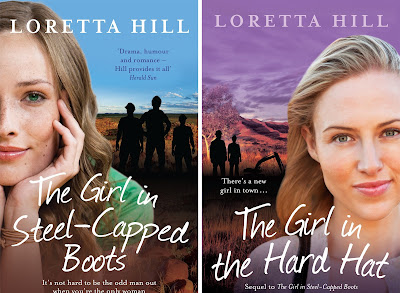
'The Girl in the Hard Hat' by Loretta Hill

 Received from the Publisher 

From the BLURB:

Wendy Hopkins arrives in the Pilbara to search for the father who abandoned her at birth.

Getting mixed up in construction site politics at the Iron Ore wharf just out of town was not high on her ‘to do' list. 

But when she takes a job as their new Safety Manager she becomes the most hated person in the area. Nicknamed ‘The Sergeant', she is the butt of every joke and the prime target of notorious womanizer, Gavin Jones.

Giving up is not an option, though.

For, as it turns out, only Wendy can save these workers from the impending cyclone, find a man who wants to stay buried and ... put a bad boy firmly in his place.

This review is part of 'The Girl in The Hard Hat' blog tour.

Check out the review that came before, from Book Muster Down Under
... and the one that's coming after, via Funkenwagel!

Wendy Hopkins hasn’t worked in two years. Her first year of leave she was backpacking around Europe, trying to forget an accident that cost a man his life and would have ended her career. The second year she discovered that her life was a lie, her father was not her father and her entire family had kept the secret from her all this time. 

Wendy has been searching for the mystery man that is her father, but her family have closed ranks and insist they don’t want her stirring up old history. For one year she has obsessed over finding this man, but now she has to admit to herself that she may have reached the final dead-end and now she needs to start making money again, get her life back on track.


How many more shocks were around the corner? 
She couldn’t relax. All she wanted now was the truth, so that her world could never again be ripped out from under her like it had that day on the phone.So she put her whole life on hold. 
For six months she’d searched for the drifter who was her father – driving from town to town in northern Australia. She was no more at home on the road than she was anywhere else. But dark-haired Hector, the welder, with two toes missing on his right foot, a taste for red dust on his boots, and a bag on his back, seemed more like an Aussie myth than a miner with a daughter he’d never met. 

When she bumps into her uncle, Mike, in Karratha and he (reluctantly) says he can get her a job working on the Pilbara – one of the longest jetty open-sea wharves in the world – she happily takes him up on the offer. Before getting waylaid by a guilty conscience and then the hunt for her father, Wendy was a qualified Safety Manager, and she looks forward to working again on this colossal project.

Except uncle Mike failed to mention he was using blackmail to get Wendy her job, and the man he was blackmailing, Dan ‘Bulldog’ Hullog doesn’t have a job for her . . . but he does have an assistant position opened up at Barnes Inc, where there are 350 men and five women currently stationed in the Donga town.  

The Pilbara job is unlike anything Wendy has ever seen. Set on a majestic landscape where the red-dust outback meets the sea, there are massive pile-drivers constantly at work, and cranes dot the horizon. But this is also a project that is woefully behind on health and safety – partly because the current Safety Manager is a bumbling alcoholic. Within 48 hours of being on site, Wendy gets the old manager fired and slots into the position herself – something which does not endear her to the rest of the crew.

But one man who doesn’t mind this feisty blonde who has come to shake things up is Gavin Jones. Resident Pilbara Lothario, Gavin’s last attempted flirtation ended disastrously, but once he lays eyes on Wendy he immediately wants her – so much so that he steals a kiss and receives a punch for his efforts.

Wendy can see right through Gavin’s love em’ and leave em’ mentality, but that doesn’t stop her from lusting after the heartbreaker. But Gavin runs hot and cold – wanting her one minute and then convincing her to stay away from him. Because Gavin is bad news with a history that’s plaguing him, and he doesn’t want Wendy getting caught up in his nightmare.

A storm is brewing in the Pilbara – it’s cyclone season and the weather is as unpredictable as love. 

‘The Girl in the Hard Hat’ is the second contemporary Australian romance from Loretta Hill, a follow-up to her 2012 book ‘The Girl in Steel-Capped Boots’ (which made my favourites list!).

The second I heard that Loretta Hill had a second book in store; I couldn’t wait to return to the Pilbara. I loved Hill’s first book, which threw ‘Madame Engineer’, Lena Todd, into the male-dominated construction site and had her falling for the client, Dan Hullog. I loved that Hill was writing a romance in which the women stuck out like sore thumbs – where they were outnumbered 350:5 and had to show their mettle against misogyny and sexism. Certainly, a sea wharf construction site is not your typical romance setting – and Hill excels as much in throwing readers into the deep-end of this setting as she does her female characters.

But I was particularly eager to get back to Pilbara because of the characters Hill introduced in ‘Steel-Capped Boots’. She wrote a cast of infectiously delightful characters who I really came to know and love while reading, so I couldn’t wait to catch up with them again; workers Fish and Radar, profanity-happy manager Carl who had a crush on bus-driver Sharon. Dan ‘Bulldog’ Hullog, the despised client with a heart of gold. Even grumpy man Mike, out to make everyone miserable. And, of course, flirtatious pretty-boy Gavin Jones, who pursued Lena Todd so hard in her book. I’m thrilled that Gavin is the hero of Wendy’s story – because even through his heavy-handed flirting with Lena, you could tell there was more to this guy than a quick smile and easy promise, and Hill picks him apart beautifully in ‘The Girl in the Hard Hat’. If I had any complaints about this second book, it’s probably that I thought Gavin’s back-story was a wee bit over-the-top and nearly strayed into soap-opera territory, but I loved him regardless.

The secondary characters really are given starring roles in this sequel – something I thoroughly appreciated. They’re not merely side-lined; they’re actually given fairly meaty minor stories that continue their development. For new couple Lena and Dan, there’s a wrench thrown into their relationship when Dan’s ex-fiancée, Annabelle, comes flouncing into town hoping to reconcile with her ex, much to Lena’s worry and chagrin. Carl and Sharon, likewise rocking along in a comfortable new romance, are more in love than ever and taking baby-steps in their relationship. There’s also a new character introduced, HR man ‘Chub’ – who calls Wendy ‘little mate’ and she replies in kind with ‘cobber’. I loved Chub; he’s a funny, food-loving sweetheart and one of Wendy’s first allies on the male-dominated site.

Wendy is another great heroine, who perseveres and proves her tenacity in the face of on-site pranks and her own crumbling world. She certainly has a lot on her plate – between preparing the Pilbara site for cyclone season, searching for her missing father and keeping her lust for Gavin Jones under control. There is a lot happening in Wendy’s world, and while she does have (totally justified!) mini-breakdowns trying to cope with everything, I loved how hard-headed she was and determined to get on with the job and her life.

The romance in this second novel is scrumptious; and another great aspect to Hill’s series, that on this construction site covered in red dust, where everyone wears reflector vests and have only their container-like Dongas for privacy, that some characters can get so hot n' heavy and turn this decidedly un-romantic setting into a sensuous delight. Gavin and Wendy are a great odd-couple, and I loved their push-and-pull. 

Loretta Hill’s follow-up is as fantastic as her first contemporary Aussie romance. I once again revelled in the unusual, male-dominated outback setting and the fascinating, insular life of the Pilbara construction site. The romance is another winner, when both Wendy and Gavin have complicated pasts and haunting secrets. I really, really, really hope this isn’t the last time we visit the Pilbara. I loved catching up with the likes of Carl, Sharon, Lena and Dan – and now I'd like to return again and read how Wendy and Gavin are getting on, and maybe meet some new Pilbara crew. In the meantime, I’m also keen to read Hill’s upcoming novella ‘One Little White Lie’, coming this February.

5/5  


Monday, December 31, 2012

Reflecting on my 2012 Australian Women Writers Challenge


Hello Darling Readers,

It seems fitting that the same year that Julia Gillard roared about misogyny in Parliament  there was a real focus in Australia, regarding the gender divide in publishing. 

Jane Sullivan began the year with this poignant piece about literary sexism, concluding with these frightening statistics: 


Miles Franklin Award since 1957
■40 wins for men
■13 for women
■10 men won more than once
■Two women won more than once: Thea Astley (four times, including a joint win) and Jessica Anderson (twice)
So, 27 men, nine women have won.
In the past 10 years, only two women have won: Alexis Wright (Carpentaria, 2007) and Shirley Hazzard (The Great Fire, 2004)

And just this month author Tara Moss broke down the gender-divide in a blog post. The pie-graph which shows that the New York Review of Books reviewed 627 books my male authors in 2011, and only 143 by female authors kinda says it all. 


But there were also some wonderful literary landmarks for women in publishing this year. For starters, The Stella Prize opened its doors for entrants into the annual literary prize for Australian women’s writing. Anna Funder won the 2012 Miles Franklin Award, a particular triumph after last year’s male-only shortlist. And overseas there was even more triumph, with Hilary Mantel becoming the first female author to win the Man Booker Prize twice.


So what’s all this fuss about more exposure for women writers? And why was there an Australian Women Writers challenge, let alone a prize created for Australian Women Writers? No, it wasn’t a case of ‘if you have a hammer, everything looks like a nail’, as some wrongly assumed. And don’t make the mistake of thinking that the gender divide is exclusive to literature. This is something that the anonymous feminist group, the Guerrilla Girls, have been protesting in the art world for ages. 


Heck, video blogger Anita Sarkeesian even received copious amounts of online abuse for daring to speak out about the inherent sexism in the gaming community. 


And actress Geena Davis has created an Institute on Gender in Media to address the serious lack of female representation in films and TV (and if you really want to blow your mind, watch the documentary ‘Miss Representation’) 


Now, speaking of Geena Davis, I think her Institute’s slogan really gets to the heart of the gender divide, whether it be in literature, film, television or the art world. ‘If she can see it, she can be it.’ That is so, so true. And if she can read it, she can be it – that means reading strong, female heroines who don’t simper and pout before their male counterparts (sorry, Bella Swan) and it means that women who work in the publishing industry see their accomplishments reflected in awards and reviews. 


I kicked off 2012 with a give-away centred around some of my favourite young adult Australian Women Writers, to highlight my participation in the challenge which aimed to get more people reading books by female authors. And now the year is almost over, and I thought to reflect on a few of the AWW books I read this year.


I read 27, and I wish I'd read more. To be fair, I did also make it a point to interview most of these authors too, or write articles around them, but laying them all out makes me realize that I should have read a lot more, and I’m making a promise to myself to at least double that number in 2013. Because there is a gender divide in publishing, and every single person whose world revolves around books should be outraged and do everything they can to address the issue and bridge that divide. 


• The Interrogation of Ashala Wolf’ The Tribe #1 by Ambelin Kwaymullina & Kill Your Darlings blog
• 'The Fine Color of Rust' by P.A. O'Reilly and interview 
• 'Creepy and Maud' by Dianne Touchell and interview 


• 'Quintana of Charyn' Lumatere Chronicles #3 by Melina Marchetta
• 'Friday Brown' by Vikki Wakefield - interview, Melbourne Writers Festival recap and 'in conversation' recap


• 'I'll Tell You Mine' by Pip Harry and interview 
• 'Shadows' The Rephaim #1 by Paula Weston and interview 
• 'Holier Than Thou' by Laura Buzo and interview 


• 'Red Queen' by Honey Brown
• 'After the Darkness' by Honey Brown
• 'Disharmony' The Telling #1 by Leah Giarratano and interview 


• 'Mary Bennet' by Jennifer Paynter
•  'The Golden Day' by Ursula Dubosarsky
• 'Ruby Moonlight' by Ali Cobby Eckermann


• 'Night Beach' by Kirsty Eagar and interview 
• 'Grace Beside Me' by Sue McPherson and Kill Your Darlings blog 
• 'The Children of the King' by Sonya Hartnett


• 'Losing It' by Julia Lawrinson and Melbourne Writers Festival recap
• 'The Wrong Boy' by Suzy Zail
• 'Queen of the Night' by Leanne Hall


• 'The Reluctant Hallelujah' by Gabrielle Williams and interview 
• 'Sea Hearts' by Margo Lanagan and interview 
• 'Playing Beatie Bow' by Ruth Park


• 'Halfway to Good' by Kirsten Murphy
• 'May Gibbs: More than a Fairy Tale' by Robert Holden and Jane Brummitt
• 'The Girl in Steel-Capped Boots' by Loretta Hill
| More