Search This Blog

Showing posts with label Aussie. Show all posts

Sunday, February 19, 2023

'Compulsion' by Kate Scott


This novel was gifted to me by the publisher 


From the BLURB; 

It’s the turn of the new millennium, and the bright young things are partying like it’s the end of the world. Dark glamour and debauched music reign, gigs culminating with everyone on stage – or undressed. Lucy, editor of a music magazine, is at the blazing neon centre, ecstatically seeking oblivion. But as her life (featuring a stalker, a not-quite ex-husband, and an affair with a cold, charismatic musician) veers from complicated to chaotic, she burns it all down, decamping to the remote seaside town of her childhood ­– to start again. 

In Abergele, Lucy recreates her old existence in hothouse miniature. Past friends and compulsions reappear, along with new fascinations. One of them is Robin, photographer and lonely son of a famous producer. Recognising in each other a fellow exile and a rich source of distraction, they fall into step on daily rambles across the cliffs. Their charged conversations about music and philosophy function as both high-stakes flirtation and a stealth mechanism for understanding themselves, resulting in an intense bond that disarms them both. 

Compulsion is a razor-sharp debut about the transcendence of new highs, the allure of new lows, and the relentless power of our obsessions. Music, sex, food, drugs, fashion and nature coalesce to overwhelm the senses on every page.

'Compulsion' is the debut adult-fiction novel by Australian author Kate Scott, published by Penguin Random House and released in January of 2023.

I was very kindly gifted this copy while I was attending a meeting at PRH, and getting a squiz at their new Melbourne office location. I had this one pressed into my hands as a great read if I wanted some Y2K nostalgia, given that this novel is set in 2003 and 2004 and very much speaking to my millennium young-adulthood (I also loved its purple Vox Lux vibes!)

I don't know if the way I want to describe this novel is one the author will appreciate. Because I'm going to make a very millennial reference as a teenager of the early-00s that is such a specific pop-cultural definition of "cool" because it was so far removed from my actual life and youth (and yet I think the author was an *actual* cool person of the time, so might cringe at me reaching for this). Here it goes; ... imagine if Skins continued into the character's early-adulthood and their 20s. I'd also say there's a way I'd categorise this as a millennial The Great Gatsby if the 'green light' everyone reaches for is the bygone era of the 80s which, they're all convinced had better music, drugs, and sex ... even as in the most meta-way possible they're currently toiling in a novel about nostalgia for the early-naughties (and so we all beat on). Maybe this is a Y2K Almost Famous in which some characters are trying to grasp at the new music-scene, the new way of talking, and writing about said scene.

I don't know. There's a lot in here - but if you cook it all down, that logline is pretty accurate; Set against the backdrop of the new millennium, a seductive summer read about obsession, sex, friendship and music from an exciting new talent.

It's basically a novel revolving around the characters of Lucy and Robin who find themselves in their hometown of Abergele, in Wales - Lucy is a music magazine editor trying to write her first book, and fleeing some toxic romantic entanglements, who retreats to the seaside town of her childhood. Robin is a photographer and son of a famous music producer, back in town to be by the bedside of a sick relative. They stumble and slide into each other (Robin happens to be maybe-dating one of Lucy's ex-classmates and mean girl-ish nemeses who still lives in town). They form a walking-friendship and then Lucy forms a little cohort of friends old and new who come to her dining table at least once a week for lavish dinners, deep-and-meaningfuls, drugs, booze, and rapid-fire music listacles.

A good chunk of the novel is revelling in their revelry, getting across some hyper-specific and niche music opinions that kinda feels like those intense pop-culture asides in a Tarantino movie ... but eventually the path reveals itself, and there's a love story buried in here as Robin and Lucy flit and fumble towards some semblance of connection they're both clearly craving.

Straight up; if you're not in the mood for this novel, it'll piss you off (but isn't that true of most things?) I just mean; this is a novel that is buoyed by language and nostalgia. Maybe because I was in that "this is Skins!" headspace, but reading the novel's thirst for nostalgia even as the characters are living in the moment, I was reminded of this bit by UK comedian Simons Amstell where he talks about being a teenager and running screaming through the streets with his friends and even then thinking; "this is fun, this is what being young looks like, I better remember this because this is definitely what being a teenager is all about," in this never-ending paranoia narration of remembering not to forget, and not living enough in the moment while you're trying to imprint the moment;

Robin is struck by how beautiful everyone looks in the sky's humid matt-black embrace. He mustn't forget this, he thinks; he mustn't forget how young they are tonight.


The novel is almost lackadaisical in its plotting, but manic in its language and dialogue - some of which is so *lush* and delectable. Some sentences made me gulp, they were so delicious on the page; 


The air outside crackled and rasped. Our cab pulled away from the curb, and Anika opened the windows to drink in the dissolving afternoon. It carried the perfume of jasmine, frangipanis on the edge of rot, and trace elements of promise. The sunset gathered like a flock of flamingos and broke apart with fanfare.


See, I read that as an Aussie ‘Weetzie Bat,’ some real Francesca Lia Block vibes. And I dig it!

But even as I admired and loved some of this writing, even I can admit - it gets a little overwrought (especially when the plot itself is so languid) and huge chunks of the novel do indeed read like whatever tome and ode to music that Lucy is working on for her manuscript, but I really could have just done without (the descriptions of a song could be beautiful, but rapid-fire espousals on niche and obscure musical references just made me feel deeply uncool and head-spinny).

The other part of this novel that I didn't get (but just rolled with) is ... it's set in Abergele - why? Like, the whole time I was thinking that it *sounds* Australian. I could picture this all happening in an Aussie seaside town. The characters sound Australian, to me. The early-00s being drawn is the Y2K I remember living through (and I grew up on the Mornington Peninsula) ... but then I'll be walloped over the head with "actually, this is Wales." And I'm not sure *why*? The author (I don't think?) has ever lived in Wales? (I see she's lived in Newcastle and Brisbane though, and YES! - that's what this place reads like!) Was Abergele just to settle my "this-is-an-ode-to-Skins" opinion even more? Maybe the songs and artists being referenced were mostly European (I honestly could not tell you, most of the references were over my head) so they thought that music-diet should inform location? Was it so that Lucy could more easily scoot over to Berlin to write about the concert scene over there?

The setting isn't really drawn out overly (like I said: I read most of this thinking it was Australia) and apart from Lucy casually throwing off a fisherman's jumper or the author outright saying she needed to return to Abergele, I really wasn't getting "Wales" from it? And it's a shame. I think this novel could have had a whole new life and appreciation had the author accepted and promoted it as a Gatsby does millennial Brisbane.

Overall I really liked this when I was in the mood to pick it up. On a language and syntax level some of it is overwrought, but GOSH - is it fun! The author has a real talent that I look forward to tracking. Maybe 'Compulsion' is a little navel-gazey and too focused on sounding clever (much like the characters), and some aspects sound good on blurb but read empty on the page (like the aforementioned Abergele setting - nothing against Wales! But ... you're an Aussie author, embrace it!)

But as a debut I'm pretty impressed that the author has such a voice on them. I'm also not in the least surprised to discover the Kate Scott has come from the Zeitgeist Agency stable, who I think are very voice-y literary agents and tend to nail it (brava). This one rather tickled me, but maybe I'm just a millennial chasing that nostalgia-hit that Scott blows out so prettily ... if that sells it to you, then; this is like a Skins redux for millennial adults.

4/5

Monday, August 29, 2016

'Words in Deep Blue' by Cath Crowley

Received from the Publisher

From the BLURB:  
Second-hand bookshops are full of mysteries  
This is a love story. 
It's the story of Howling Books, where readers write letters to strangers, to lovers, to poets, to words. 
It's the story of Henry Jones and Rachel Sweetie. They were best friends once, before Rachel moved to the sea. 
Now, she's back, working at the bookstore, grieving for her brother Cal. She's looking for the future in the books people love, and the words that they leave behind.  
Sometimes you need the poets


‘Words in Deep Blue’ is the new contemporary young adult book from Australian favourite, Cath Crowley.

Crowley’s ‘Words in Deep Blue’ is her first new book since 2010’s extraordinary ‘Graffiti Moon’ – and it was worth the wait. It’s a book about books – about loving, reading, and imprinting on books – with the story pivoting around a second-hand bookshop called Howling Books, where a long-lost friend returns to escape grief, and where a family unit and all its individual members have love lives that are well and truly in the in the tumults. It’s mostly the story of Rachel and Henry – once best friends, until Henry fell for a girl called Amy, and Rachel confessed her love only to move away. It’s a story about the Letter Library that resides in Howling Books, where people are encouraged to write in the margins, underline, and use books as conversations to be had with other readers. It’s a book about finding the right book at the right time.

But before I get into just how much I loved this particular book, I want to tell you all about this 2015 article I read in The New Yorker that stays with me. It was by Adam Gopnik, and titled ‘When a Bookstore Closes, an Argument Ends.’ I have a favourite line from that article, and it’s something I kept thinking about while reading ‘Words in Deep Blue’ (indeed; I got so caught up in this story and its wisdom, and especially the characters – that I wanted nothing more than to print out a copy of Gopnik’s article and leave it for Henry or his father Michael, folded into a book in their Letter Library). Here is that line of Gopik’s that I love;

At a minor level, once a bookstore is gone we lose the particular opportunities for adjacency it offers, determined by something other than an algorithm. It is rarely the book you came to seek, but the book next to that book, which changes your mind and heart.

The pivotal setting of ‘Words in Deep Blue’ being Howling Books – a second-hand bookshop – is nothing short of genius. On one level, a book about books is just catnip for readers, and young adult readers especially. And Cath Crowley gets very meta in this book, where she frequently title-drops and author-drops the names of works and writers she loves dearly. Be prepared to read this book with a notepad and pen beside you, so you can quickly jot down the books mentioned that you’ll definitely want to check out later. From John Green’s ‘The Fault in Our Stars’ to Kirsty Eagar’s ‘Summer Skin’, ‘A Visit from the Goon Squad’, Karen Russell, Kelly Link, Neil Gaiman, and the short stories of Jorge Luis Borges – this is Crowley revealing quite personal parts of herself, I feel, in the books she loves and has loved. Readers will feel a spark of joy and closeness to the author when they read one of the characters espousing dearly about a book they likewise adore, just as I did with this remembered exchange between father and son;

He and I have had hundreds of conversations about the characters in books. The last one we had was about Vernon God Little, a book by D.B.C. Pierre. I’d love it enough to read twice. 
‘What did you love?’ Dad had asked. 
‘Vernon,’ I’d said, naming the main character. ‘And the way it’s critiquing America. But mainly it’s the language. It’s like he’s left the words out in the sun to buckle a while, and they don’t sound like you’d expect.’

I also loved that this is a book about imprinting on books – which means highlighting, scribbling in the margins, and dog-earing – all the things some bibliophiles get horrified over the very notion! But I am an avowed dog-earer, under-liner, margin-scribbler and I’m glad the characters in ‘Words in Deep Blue’ are too. I’m of the firm belief that creases and scribbles in a book are like laugh-lines on a face – signs of love.

This is also a book about loving the places where books can be found and talked about – flesh and bone books, with spines and smells and heft. Though its setting is a second-hand bookshop, the way these characters talk about finding books and connecting with people over stories is in itself a love letter to all bookshops, and libraries, friends who loan their copies, street libraries and any place else that good books and the people who recommend them can be found;

‘I read an article that said second-hand books will be relics eventually,’ I tell him, still trying to make excuses for how things went tonight. 
'Do you know what the word relic actually means, the dictionary definition?’ he asks, offering me the prawn crackers. 
I take one and tell him I don’t know. 
‘It means sacred,’ he says, breaking his cracker in half. ‘As in “the bones of saints.”’

What’s kind of ironic and meta in this book about loving books though, is that all those authors and stories Crowley’s characters mention? Just as many people would list Crowley’s own works amongst the greats that have changed and upheaved them.

‘Words in Deep Blue’ is also a love-story … or, a few love stories really. Rachel and Henry take centre-stage for much of the book, as their history of unrequited love and friends-to-more unfolds amidst grief, jealousy and heartbreak, to eventually evolve into acceptance, forgiveness and revelation. There’s also Henry’s sister, George, who has a secret letter-writing admirer and a boy from school who wants to break through her tough exterior and become friends. Then there’s Henry’s parents whose great love story is in its final throes, and Henry and Rachel’s mutual friend Lola whose great love is music and the band she’s been dreaming about for years.

Anyone who has ever read any of Cath Crowley’s books knows that her characters are exquisite, and those in ‘Words in Deep Blue’ are no exception. I remember a long time ago (2013, to be exactly exaggerated) and Cath Crowley wrote in her blog about what I can only assume now was writing this very book. She said;

‘I keep hoping that one day I’ll find a shortcut, a door that takes me from one novel into the next. Takes me straight from Ed and Lucy’s kiss, through a small gap in the air, onto the street where Giselle and Charlie are waiting. Or even better, couldn’t I just walk a little way down the road, and have them existing on different streets in the same world?’
 
I know Crowley was writing about the frustration of finding story, but as one of her readers and biggest fans I wish for it too, on a fundamentally non-fictional level. I think the best way to describe how much I love Cath Crowley’s books is to say how much I want the characters to be real people that I could go visit. I’d love nothing more than to go from watching one of Gracie’s soccer matches, to hearing Charlie Duskin sing and seeking out new Shadow street-art – and now visiting Howling Books to tell Henry that my absolute favourite poem is Anna Akhmatova’s ‘You Will Hear Thunder’, so I could lend him my Everyman's Library Pocket Poets book of hers.

I loved these characters. I loved Henry and Rachel’s enduring friendship amidst complication. I loved meeting Cal in letters. I adored George’s bite;

‘What are you reading?’ he asks this afternoon. 
‘Kafka’s Metamorphosis,’ George says, without looking up. 
‘And what’s it about?’ 
‘Guy turns into a giant bug and eventually dies.’ 
‘Not exactly life-affirming,’ Martin observes. 
‘Life isn’t exactly life-affirming,’ George says.

And my Gosh, did I love reading new words from Cath Crowley. She has a way with language that’s poetically blunt when necessary, or can be languidly lush and is just utterly genius – and there’s just as much to admire in her words as the great wordsmiths her characters esteem.

It’s a truth universally acknowledged according to George, that shit days generally get more shit. Shit nights roll into shit morning that roll into shit afternoons and back into shit starless midnights. Shitness, my sister says, has a momentum that good luck just doesn’t have. I’m an optimist but tonight I’m coming around to her way of thinking.

I loved ‘Words in Deep Blue’. I waited six years for it, but I fell in love after the first page, and by the last it was a new favourite.

5/5

Friday, July 8, 2016

'When Michael Met Mina' by Randa Abdel-Fattah

Received from the Publisher

From the BLURB:

A boy. A girl. Two families. One great divide.

When Michael meets Mina, they are at a rally for refugees - standing on opposite sides.

Mina fled Afghanistan with her mother via a refugee camp, a leaky boat and a detention centre.

Michael's parents have founded a new political party called Aussie Values.
They want to stop the boats.

Mina wants to stop the hate.

When Mina wins a scholarship to Michael's private school, their lives crash together blindingly.

A novel for anyone who wants to fight for love, and against injustice.

‘When Michael Met Mina’ is the new contemporary Australian young adult novel by Randa Abdel-Fattah.

Michael is a teenager growing up in Sydney’s North Shore. He gets good grades, has great mates, and parents whom he describes as ‘good people’ – but for most of his life they’ve been ‘angry about almost everything.’ Michael’s Dad is so angry and riled up, in fact, that he’s founded an organisation called ‘Aussie Values’ – rallying a group of like-minded people who want to “stop the boats” and the “Islamisation of Australia”.

Mina grew up in Kabul, Afghanistan. She and her family escaped the war-torn city then travelled to Pakistan, where they were interred in an equally uncertain and unsafe refugee camp, before booking passage on a leaky boat to the safety of Australia. From there her family were placed in a detention centre, where they waited until being granted asylum. That was ten years ago, and these days Mina’s family couldn’t be happier – especially since she’s just been granted a scholarship to a prestigious private school for the next two years.

Michael attends an ‘Aussie Values’ rally, against asylum seekers.

Mina attends the same rally, supporting asylum seekers.

The next time they meet will be at Michael’s North Shore high school, where Mina’s just won a scholarship.

Randa Abdel-Fattah’s ‘When Michael Met Mina’ is a timely and intelligent new contemporary YA novel. In many ways it is a modern Aussie suburban interpretation of ‘Romeo and Juliet’– A boy. A girl. Two families. One great divide. – Two households, both alike in dignity, in fair Sydney, where we lay our scene. Because for all that there’s a lot of political examination going on (and I’ll get to that in a moment) ‘When Michael Met Mina’ is also very much a romance. There’s undeniable chemistry when these two meet; and the tension of their two families and conflicting values make for a compelling if rocky love story.

But the political and social underpinnings of the romance is really where this book thrives, and finds unique footing in the Australian YA contemporary landscape.

In many ways it’s rather depressing to think how long this book has been in the making. The first I can remember being aware of such issues as Abdel-Fattah is touching on here, was the 2001 ‘Children Overboard affair’ of the Howard government. I have a friend for whom the rise of Pauline Hanson’s One Nation party (1997–2002) was the first he had an inkling of something being not-quite-right in Australian political rhetoric. For teenagers today I can imagine there are any number of events making them hyper-aware of the manipulation of media and empty-rhetoric of politicians when it comes to human rights and asylum seekers. From the deaths of Aylan Kurdi and Reza Berati, to the rise of politicians like Cory Bernardi, or the horrifying images out of war-torn Syria juxtaposed with the National Inquiry into Children in Immigration. Australian teen readers will be very much aware of the background to Abdel-Fattah picking apart these issues, but what’s fantastic is that she’s written characters who are closer to them than many of us can imagine.

Mina being a refugee who arrived with her family by boat, and Michael living in a household with angry parents entering into the political fray – and the book being written in alternate chapters from their perspectives – puts readers closer to these issues than they’ve maybe ever been. And while there are many instances of both Michael and Mina witnessing the wider social ramifications and community reactions, for the most part they are in the thick of the action;

The report ends with the reporter outside a mosque, telling the audience about some people’s fears of ‘creeping sharia’. There’s a shot of the man who’d harassed us in the restaurant. He’s a member of a new organisation that wants to stop the ‘Islamisation of Australia’. There’s a shot of the founder, Alan Blainey. Then there’s some file footage of a group of people at an anti-asylum seeker rally. 
‘But is all this just fear-mongering?’ the journalists asks in the end. 
A bit too late for that. 
I feel like vomiting.

A lot of this book hits uncomfortably close to home, especially reading it as I did in the thick of an election campaign. Pauline Hanson has reared her ugly politics again, for instance, and the ‘Aussie Values’ of Michael’s father hints disturbingly hard at the United Patriots Front anti-Islam, xenophobic rhetoric. Indeed – the very concept of Michael attending an ‘Aussie Values’ rally while Mina wants to ‘stop the hate’ is a reference to the many United Patriots Front and ‘Anti-Racism’ rallies.

What I love though, is how slowly and thoroughly Abdel-Fattah teases out the fact that Michael needs to think for himself, and not just swallow his father’s rhetoric. Mina’s political and worldviews are clear – growing up a kid in Kabul, escaping with her family and ending up in a detention centre – but Michael’s growing up in his father’s household has influenced his opinions for far too long, and meeting Mina is what prompts him to seek truth through connection and reason. 

‘I don’t worry about them,’ he says with scorn. ‘Do they know what I have seen? Do they think they can scare me after what I’ve been through?’ 
‘No, Baba.’ 
'When we arrived in this country we had to learn the differences of this new place and we had to also learn that for everybody we are the difference. I think, Mina, there is something the majority wants us to do in order to be fully accepted, but they never tell us what it is.’

This is a fantastic book with good timing – I can’t think of a better novel for kids to be reading this post-election, especially after a certain xenophobic senator is back front and centre in Australian politics. It’s a book that asks kids to think for themselves, and to look outside their own worldviews and walk a mile in someone else’s shoes. There’s a cracking good romantic subplot here, but the politics playing front-and-centre is what makes this book a thoughtful and intelligent winner.

5/5


Monday, February 22, 2016

'Iris and the Tiger' by Leanne Hall

Received from the Publisher 

 From the BLURB:

Twelve-year-old Iris has been sent to Spain on a mission: to make sure her elderly and unusual aunt, Ursula, leaves her fortune–and her sprawling estate–to Iris’s scheming parents.

But from the moment Iris arrives at Bosque de Nubes, she realises something isn’t quite right. There is an odd feeling around the house, where time moves slowly and Iris’s eyes play tricks on her. While outside, in the wild and untamed forest, a mysterious animal moves through the shadows.

Just what is Aunt Ursula hiding?

But when Iris discovers a painting named Iris and the Tiger, she sets out to uncover the animal’s real identity–putting her life in terrible danger.

‘Iris and the Tiger’ is the new novel from Australian author Leanne Hall, a magnificent middle-grade magical-realism marvel.

Let me begin my review of Hall’s ‘Iris and the Tiger’ by quoting another book. ‘It’s the things you read at the age you are now which stick. Books crow-bar the world open for you.’ Said to a 12-year-old girl on her birthday, in Katherine Rundell’s beautiful novel, ‘Rooftoppers’.

I love that quote, and the epitome of it is surely in Leanne Hall’s ‘Iris and the Tiger’ which, though labeled as Young Adult, is really a little bit closer to this marvelous readership called Middle Grade (8-12 years, generally). Because I love middle grade literature, and I’m excited to see it grow in Australia where it’s often ignored (I use the example that many State Premier’s Literary Awards don’t recognise children’s literature as a separate category, and often lump it with YA or overlook it completely). But I see nurturing this middle grade readership in Australia as incredibly important, and intrinsically linked to the #LoveOzYA campaign in many ways – this idea that children who grow up reading Australian kids’ books will become teenagers who read Aussie YA, and then adults who read Australian literature.

In recent years, the creation of The Readings Children’s Book Prize (celebrating works of published fiction, written for children aged 5–12) has been an incredible step in recognizing and celebrating this important children’s category – and I’ve written in the past about how brilliant a Prize it is. Particularly that Aussie children and their families now have one more institution to guide them towards quality middle grade fiction – something akin to the prestigious Newbery Medal in America.

I do see middle-grade fiction on the rise in Australia – not just because of the creation of the Readings Children’s Book Prize, but publishers like Hardie Grant have recently adapted their unpublished manuscript prize, the Ampersand, to include MG as well as YA titles. This is an indication and acknowledgment that the more sophisticated YA becomes, likewise the more complex MG has to become to keep up with readers, and to keep enticing readers – and that’s also why I love the fact that one of Australia’s greatest YA daughters in Leanne Hall (of ‘This is Shyness’ and ‘Queen of the Night’ brilliance) has turned her pen to a novel for younger readers with her third book.

‘Iris and the Tiger’ is the tale of 12-year-old Iris – the daughter of greedy parents who send her on a mission to visit her dying Great Aunt Ursula in Spain, purely for the purposes of ascertaining the quality of their inheritance when she croaks. But when Iris arrives she finds herself in the middle of a mystery around a painting titled ‘Iris and the Tiger’, which sets her off on a mission to uncover the painting’s true subject – no matter the danger to her own life.

The magical realism of ‘Iris and the Tiger’ is borne of the surrealism in the paintings that hang at her Aunt Ursual’s Bosque de Nubes. Though eventually the strangeness of the paintings that Iris encounters seem to leak into the real-world and the goings-on of her Aunt’s strange and fantastical life …

A painting hanging nearby flickered. It showed an underwater scene, a rush of water, bubbles and waving water plants. There were two pink legs in the lower right corner. The legs kicked – once, twice, three times – before swimming out of view, beyond the edges of the painting. One second they were there, the next they were gone.
 
‘Iris and the Tiger’ has a little bit of mystery and suspense, and explores the cultural shake-up for Iris who befriends neighbor boy Jordi. But what makes this novel a real jewel in the crown for young readers, is it’s awakening of magical realism. It’s such a beautiful genre, but one that children rarely encounter the nuance of in the middle grade readership, which tends towards contemporary or fantasy but rarely a blend of the two.

She pictured a golden head with golden eyes and pricked ears, somewhere in the house. A striped body prowling down the curling staircase, out the front door and into the forest. Tail flicking as it moved beyond the edge of the painting and out into the real world. The tiger, doing exactly as it pleased, not caring in the slightest about the rules that should have kept it on the canvas.
 
I really commend Leanne Hall for bringing her magical realism touchstone to her first foray into middle grade. In her YA novels – ‘This is Shyness’ and ‘Queen of the Night’ – she adapted that magical realism to an urban setting with fantastically wicked results. In ‘Iris and the Tiger’ I loved that she was using art and surrealism to introduce younger readers to this beautiful genre – it kind of reads like the first time someone sees a Dorothea Tanning painting, and they’re just cracked open with all the possibilities. I also really appreciated Hall’s setting her story in Spain – it’s an ode to the rich Latin American origin and history of fabulism, and I envision young readers growing up to one day read the likes of Isabel Allende, Laura Esquivel, Gabriel García Márquez and so many more, and thinking back on their first encountering the genre with Leanne Hall and ‘Iris and the Tiger’.

This is a very special book, by a vibrant Australian author. I love that younger readers get to experience the writing of Leanne Hall, and I especially love that ‘Iris and the Tiger’ will also surprise and delight older readers alike. I loved this book – from that gorgeous Sandra Eterovic cover-art, to the story within that certainly ‘crow-bars the world open for you.’ 
Just – stunning.

5/5

Wednesday, February 17, 2016

New genre #LoveOzYA posters!

Hello Darling Readers,

I am really excited to share a new crop of #LoveOzYA posters with you all … these posters have been in the works for quite a while now, and they really came together thanks to one person in particular – Shivaun Plozza. She’s not only author of the forthcoming #LoveOzYA book ‘Frankie’ (which Melina Marchetta sings the praises of, FYI) but she’s a very talented graphic designer who put these posters together based on my ideas, and I’m just so grateful to her!

You’ll note that these FOUR posters are not the same ‘Readalikes’ format as the first two in the #LoveOzYA-inspired series. This time around I wanted to let Aussie titles set the agenda, and have a poster entirely dedicated to only OzYA books.

Click here to download the #LoveOzYA posters! 

These posters based around genre were inspired by Adele Walsh (from the Centre for Youth Literature, who also sits on the LoveOzYA committee with me) – Adele noted that teenagers don’t really care about genre-labels, they’ll be more interested if you pitch a book just by explaining it in terms of; “intergalactic space war!” So these are genre/non-genre posters, trying to mimic the way teenagers actually recommend books to each other.

... you'll also note that the posters cite the website 'loveozya.com.au' which is COMING (very) SOON! 

As always there will be titles and authors that I’ve missed – and I’m so sorry for that! I am trying to recommend as many authors as possible, and not double-up on author-recs by having their books appear on more than one poster … but I’m going to fail and I totally own that. My apologies – there are just too many awesome Aussie YA books!

But never fear, because I have ideas for future posters – the next one I have in mind is to team up with the awesome Michael Earp, and create poster/s based on his great ‘Australian LGBTQ YA’ tumblr. I just need to find another kind graphic designer willing to make those for me :) watch this space!

In the mean time, I hope you like these FOUR (!) new posters.  
And thank you again to lovely Shivaun!


Monday, November 16, 2015

'Burn' The Rephaim #4 by Paula Weston


From the BLURB:

Suddenly, Gaby remembers everything. 

For a year she believe she was a backpacker chilling out in Pandanus Beach. Working at the library. Getting over the accident that killed her twin brother. 

Then Rafa came to find her and Gaby discovered her true identity as Gabe: one of the Rephaim. Over a hundred years old. Half angel, half human, all demon-smiting badass and hopelessly attracted to the infuriating Rafa. Now she knows who faked her memories, and how—and why it’s all hurtling towards a massive showdown between the forces of heaven and hell. 

More importantly, she remembers why she’s spent the last ten years wanting to seriously damage Rafa.

‘Burn’ is the fourth and final book in Australian author Paula Weston’s young adult supernatural series, ‘The Rephaim’. 

I did not want to read this book, and at the same time I’ve been dying to read this book! Yes, the epic struggle every reader must face as they come to the end of a favourite series – when we want to find out what happens, but don’t want the adventure to end. So perhaps the highest compliment I can pay to Ms Weston is a conflicting one; when I say I absolutely loved this book, but I hate that the series has ended. 

‘Burn’ picks up from the epic cliff-hanger of Book 3 ‘Shimmer’, when Gaby’s beloved Pan Beach was facing imminent attack by demons … and she also happened to get her lost memories of some 130+ years of life as an angel-spawn-warrior back. Yes – Weston hits the ground running in this epic finale, and she never lets up. 

In ‘Burn’, fans will be reminded that the events of these four books take place over just one week in the series’ timeline. Yes, ‘Shadows’, ‘Haze’, ‘Shimmer’ and ‘Burn’ are set in just one week of Gaby’s life; from the moment Rafa’s mysterious hooded figure first appears in her sleepy beach town, to Gaby getting 130+ years’ of memories back in the blink of an eye. But Weston makes beautifully perfect sense of this elastane timeline – she has, after all, written a supernatural series with immortal, heavenly creatures who can transport to any place in the world with just a thought. And at one point, Gabriella muses on the complexity of her immortality, revealing that Weston has craftily made readers feel as infinite as she does via the book’s elongated timeline; 

A thousand stars fill the sky, ghosts of dead suns suspended in infinite blackness. 
Infinite.  
I’ve never been able to get my head around the concept. How can space be endless? How can time have no beginning and no end? How can I – made of flesh and blood and bone – live forever? How can other realities exist somewhere out there – or right here – side by side with ours? Hell dimensions and heavenly dimensions. Endless realms in between, one of which is probably hiding, or holding, the Fallen.  
Where do we fit in the universe? We exist in this world but we’re tied to other, unseen worlds. We are Rephaim, children of the forsaken. What future exists for us if we find the Fallen? What future exists for us if we don’t?  
God, my brain hurts. 

Weston really plays around with time and memory in this book, which is no easy feat when the crux of the story has been a very human Gaby discovering that she’s actually a very old angel-spawn warrior whose memories were wiped. Weston provides back-story to the decade-old feud between Gabriella and Rafa that saw her turn away from her twin brother Jude when he formed the Outcasts … we are also flung back to just a year ago, and the events surrounding Jude and Gaby’s reuniting and disappearance. 

I have to work out how to wear my old life. I’ve been someone else for a whole year; I’m a different shape now. 

I’m not always a fan of the flashback – but Weston has a beautifully nuanced and complex few in ‘Burn’. I was particularly impressed at how well Gaby’s interior voice changes – between her human self being given back her past memories, and going back to ten-years-ago when Gabriella is a hardened Rephaim fighter. There’s real distinction in the Gaby/Gabriella’s first-person-narratives, and I found myself liking old-Gabriella just as much as the Gaby I’ve been reading since ‘Shadows’. 

I especially loved the way Weston reveals Gaby and Rafa’s tumultuous history. We all knew it was coming – this couple who’ve been drawn and repelled to one another, who have a slow-burn chemistry that’s simply delicious to read – but I tip my hat to Weston for making the pay-off so completely worthwhile. It’s been building up over four books now, but Weston managed to both give Gaby and Rafa enough plausible hurt in their history, tempered with the fiery romance they’ve been building throughout this series … they’re a masterstroke of a coupling, and as this series concludes I’m mostly going to miss their duck-and-weave romancing. 

Jude is another stand-out in this book which, again, is kinda impressive for a character that readers were only formally introduced to one book ago. But loving Jude so much in ‘Burn’ is bittersweet … but only if this really is the last-last-last time we’ll get any ‘Rephaim’ stories from Paula Weston. Probably because he’s been such a big part of this story, even with so little real-time page-time, Jude still feels like a mystery that readers could have fun unwrapping. And because I loved where Jude ended up by the end of this book, I’m crossing my fingers that maybe Paula Weston has some spin-off, short-stories SOMETHING – ANYTHING up her sleeve!

Highlight for spoiler!

[And because I loved where Jude ended up by the end of this book, I’m crossing my fingers that maybe Paula Weston has some spin-off, short-stories SOMETHING – ANYTHING up her sleeve!]

I don’t want to go too much into the plot details of ‘Burn’ – save to say, Paula Weston answers all our most burning questions and still leaves us wanting MORE … indeed, the book ends with so much possibility. Which is what you want from a series that was all about immortal teenagers – the sense that their crazy, supernatural life goes on and on and on. For me; I’ve loved everything about this series, and the finale was exactly what I wanted. Secrets revealed, lies exposed, romance galore and second-chances. I’m going to miss this world and these characters so damn much, but I thank Paula Weston for gifting readers this epic rollercoaster of a ride. 

5/5

Thursday, October 15, 2015

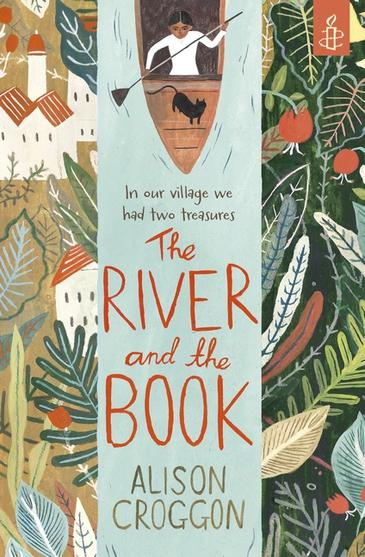
'The River And The Book' by Alison Croggon


From the BLURB:

Combining magical realism and fable, this lyrical tale is the story of a landscape and community destroyed by Western greediness.

In our village we had two treasures: the River, which was our road and our god; and the Book, which was our history, our oracle and our soul. Simbala is a Keeper of the Book, the latest in a long line of women who can read the Book to find answers to the villagers' questions. As developers begin to poison the river on which the villagers rely, the Book predicts change. But this does not come in the form that they expect; it is the sympathetic Westerner who comes to the village who inflicts the greatest damage of all.

‘The River and the Book’ is the new youth literature work from Australia author Alison Croggon. 

This is a thought-provoking and wildly compelling book of magical realism, exploring colonialism, and exploitation of indigenous people by the First World. It’s the story of a village that has a Book which is both oracle & soul – predicting future, answering questions – but when developers come and poison the nearby river, everything changes.

Our protagonist is young woman Simbala ‘Sim’ – part of a matriarchy within her village, of women who can read The Book. But then a stranger comes, a writer, who perhaps has her own best intentions, but they inevitably unravel the Indigenous Culture with corporate greed.

Yes, there are a lot of metaphors and not terribly subtle allusions to Western Imperialism in this short, 136-page book. But I don’t know that the subject of human rights and colonialism, alongside the annihilation of Indigenous cultures can be done light-footedly. And why should it?

This is a book appropriate for readers aged 12+, I’d say – and those young readers will find important, insightful discussion within its pages. That it’s often confronting and uncomfortable reading is one of its strengths. And the proof is in the fact that the book is endorsed by Amnesty International UK, “as contributing to a better understanding of human rights and the values that underpin them.”

Mely asked me today why I keep writing this book. I was surprised by her question, and thought about it for some time. I want, I told her, to tell my story to someone, even if it is only Mely who hears it. Mely pointed out that I could just say it to her, without all the bother of scratching the pen over the paper, and cursing at my mistakes, and having to start again. “I would listen,” she said. “I like to listen to you.”

While it is slow in parts, this book will nevertheless ignite serious discussions for young readers – among them can be investigating tribes that went undetected in the modern world and avoided Westernisation. But there’s also a bit of magical realism fun in here – including a sassy talking cat – and beautiful illustrations by Katie Harnett. A small book with a powerful message.

4/5


Friday, October 9, 2015

'Inbetween Days' by Vikki Wakefield


From the Blurb:

At seventeen, Jacklin Bates is all grown up. She’s dropped out of school. She’s living with her runaway sister, Trudy, and she’s in secret, obsessive love with Luke, who doesn’t love her back. She’s stuck in Mobius—a dying town with the macabre suicide forest its only attraction—stuck working in the roadhouse and babysitting her boss’s demented father.

A stranger sets up camp in the forest and the boy next door returns; Jack’s father moves into the shed and her mother steps up her campaign to punish Jack for leaving, too. Trudy’s brilliant façade is cracking and Jack’s only friend, Astrid, has done something unforgivable.

Jack is losing everything, including her mind. As she struggles to hold onto the life she thought she wanted, Jack learns that growing up is complicated—and love might be the biggest mystery of all.

InbetweenDays’ is the new contemporary YA novel from Australian author, Vikki Wakefield.

It’s taken me so long to get around to writing a proper review of this book because a lot of crazy things have been happening lately and I’ve found myself getting so busy … I had to come back and do a re-read of Wakefield’s new gem before I could sit down to write a proper review, and in doing so I re-discovered a little slice of literary calm in the midst of my hectic waking life. A novel to take me completely out of myself; enjoying eating up Wakefield’s richly imagined small-town and the complex fighting character of Jacklin Bates – and I’m reminded all over again of what a captivating author Vikki Wakefield is.

‘Inbetween Days’ is about Jack, who has a complicated relationship with her sister and the boy she wants more from. Jack lives in a town that has a ‘suicide forest’, where people frequently go to die, and I particularly adored the town of Mobius – a setting that’s as rich and complex as the characters and impacts on them a lot. Mobius begs the question; what does it do to a town that’s a dead-end (literally) for so many people?

Morning arrived late to our town and night came early; it was ten by the time the sun made it over Pryor Ridge and around four when it ducked behind Mount Moon. Everything in Mobius stretched to reach the light: we built out houses on stilts, our trees grew tall and spindly, our shadows were long.

Now, tell me that little description doesn’t have the ring of Harper Lee to it?

Somehow, it was hotter then: a black dog suffered on a summer's day; bony mules hitched to Hoover carts flicked flies in the sweltering shade of the live oaks on the square. Men's stiff collars wilted by nine in the morning. Ladies bathed before noon, after their three o'clock naps, and by nightfall were like soft teacakes with frostings of sweat and sweet talcum.

(P.S. – that’s one of my all time favourite slices of writing, from ‘To Kill a Mockingbird’)

This novel has Vikki Wakefield covering a lot of new territory – a real break away from ‘Friday Brown’ and ‘All I Ever Wanted’. For one, she really delves into matters of “romance” which were glancing blows in her first two books – in ‘Inbetween Days’ there’s a love triangle of sorts (a very Vikki Wakefield triangle, to be sure) and I’ve got to say I particularly appreciated reading sexual politics being negotiated by Wakefield’s Jack, a young woman who is piecing together the difference between sexual desire and true intimacy.

I also loved the dynamic of Jack’s relationship to her sister, Trudy, who she has moved in with after dropping out of school. Mim in ‘All I Ever Wanted’ may have had some dubiously strapping older brothers, and Friday Brown had what started as an oddly sisterly-sick relationship with Arden, but in ‘Inbetween Days’ Wakefield really delves into this tricky familial bond with fascinating results;

Trudy lunged. She grabbed my arm and dragged me off the bed. I hit the floor, bellowing. Trudy hauled me up from behind, digging her fingers into my armpits and shoving me along in front of her like a sack of manure. At the bathroom door she gave me one hard shove. While I leaned over the basin, she ran the shower.She elbowed me in, fully clothed, without waiting for the water to run hot.

I loved reading Jack and Trudy scenes – there’s something visceral in Wakefield’s writing them, I can practically taste the adrenaline when they corner each other like that.

But there are also many aspects to ‘Inbetween Days’ that make this a wholly beautiful Vikki Wakefield book. Like, for instance, the writing of marginalised characters from lower socio-economic backgrounds. I think when youth literature talks about ‘We Need Diverse Books’, it’s often racial and sexual diversity that gets talked about the most – but really all kinds of diverse characters are needed, and a rather insidious common portrayal of white middle-class characters often pervades youth lit. Wakefield doesn’t hold to that – she constantly challenges with her books. In all three she has written characters who are struggling – they don’t have a fixed address (like Friday and her mother) or they’re in constant trouble with the law (Mim’s family in ‘All I Ever Wanted’). This is explored again in ‘Inbetween Days’, with drop-out Jack whose regional town is dying so thoroughly that she finds herself without a job … Wakefield’s characters remain some of the truest and most vital to modern Australian young adult literature.

‘Inbetween Days’ is Australian YA gothic. It’s at times bleak and tender, with touches of romance threaded with heartache, all playing out in a town that’s dead and dying. As anyone who has read a Vikki Wakefield novel knows, it’s near impossible to completely summarise her stories; save to say it’s another ‘must-read’ from one of Australia’s best young adult authors writing today.

5/5  


| More