Search This Blog

Thursday, June 10, 2010

'Black Blade Blues' by J.A. PITTS

From the BLURB:

Sarah Beauhall has more on her plate than most twenty-somethings: day job as a blacksmith, night job as a props manager for low-budget movies, and her free time is spent fighting in a medieval re-enactment group.

The lead actor breaks Sarah's favorite one-of-a-kind sword, and to avoid reshooting scenes, Sarah agrees to repair the blade. One of the extras, who claims to be a dwarf, offers to help. And that's when things start to get weird. Could the sword really be magic, as the "dwarf" claims? Are dragons really living among us as shapeshifters?

And as if things weren't surreal enough, Sarah's girlfriend Katie breaks out the dreaded phrase. 'I love you.' As her life begins to fall apart, first her relationship with Katie, then her job at the movie studio, and finally her blacksmithing career, Sarah hits rock bottom. It is at this moment, when she has lost everything she has prized, that one of the dragons makes their move.

And suddenly what was unthinkable becomes all too real and Sarah will have to decide if she can reject what is safe and become the heroine who is needed to save her world.

I found this book because the wonderful Daniel Dos Santos did the cover-art (of course he did – it’s fabulous!). I really liked the sound of this book because it seemed to be a very different sort of Urban Fantasy.

As the UF genre grows, it can also get a little same-same. Sometimes I get into such a reading rut with this genre that I think if I never read about vampires and werewolves ever again, it will be too soon. Don’t get me wrong – I do love me some UF, and I do have a special place in my heart for the fanged and furry, but occasionally I want to break out of the box the genre seems to be creating for itself.
Recently I have enjoyed Gail Carriger’s ‘Alexia Tarabotti’ series for its steampunk-spin on werewolves, and Lydia Dare’s series that put lycanthropes in 1800’s England.

J.A. Pitts writing debut seemed to be the perfect remedy for me. It’s about Norse Mythology – goblins, giants, dwarves and dragons being the main fantastical creatures (but set in modern day Seattle). His series also stands out for having a lesbian protagonist. Great. Fantastic. Something entirely different but still befitting the ‘Urban Fantasy’ tag.

I really, really wanted to like this book. But the main problem with ‘Black Blade Blues’ is pace, or lack thereof.

By page 178 of this 398-page book not a lot has happened.

Pitts offers tid-bits of what’s to come by weaving a narrative alongside Sarah’s – told from the perspective of two ancient and terrifying dragons as they hide amongst humanity.
Meanwhile, from Sarah’s POV; strange things have been happening ever since she forged the prop sword, Gram. Since that black sword came into her possession Sarah has nearly been run off the road by a mysterious black Hummer. A movie extra called Rolph has warned her of the power the sword wields and implored her to use it for good, against dragons. She’s also come face-to-face with the smarmiest, most evil-looking philanthropic businessman she never wants to meet again. And a crazy homeless man in a dumpster warns her about the bones of the earth.

All of these snatches of information and mystery are interspersed with Sarah’s day-to-day life as she goes to her blacksmith job and her part-time job at a props department for a B-grade movie. A good chunk of Sarah’s narrative is also devoted to her rocky relationship with girlfriend, Katie, as Sarah struggles with her sexuality and coming out of the closet.
But the hints of ‘more to come’ are not enough to keep the story interesting. There aren’t enough clues dropped about the over-arching plot and all the in-between bits of Sarah’s life become tedious and frustrating when nothing much else seems to be happening in the plot.

The majority of Urban Fantasy is fast-paced. The story normally starts in the middle of a catastrophe of some sort and goes helter-skelter from there. Mercy Thompson’s ‘Moon Called’, when a stray werewolf turns up at Mercy’s garage. ‘Halfway to the Grave’, Cat makes a vampire kill in the opening chapter. ‘Nice Girls Don’t Have Fangs’ has Jane Jameson waking up as one of the undead by the end of chapter one.
That’s one tried and true way to hook the reader – set them on a crazy ride and don’t let-up until you’ve got them buried so deep in plot and mystery that they can’t stop reading.
By the end of chapter one of ‘Black Blade Blues’ one of the swords Sarah made has been damaged by a ham-fisted actor. O-kay. Not exactly a thrill-ride start.
And like I said, the action doesn’t even pick up half-way through the book. It’s asking a lot of readers to stick with the story when the story doesn’t make itself apparent until well past page 100 (the magic number by which most readers decide whether to keep going with a book, or label it as a DNF).

The slow pace could have worked, if it wasn’t for the fact that Sarah isn’t an instantaneously likable protagonist.

The one sticking-point for on-the-fence readers may be if the narrative voice is strong enough to hold interest, despite lack of plot. Readers are willing to forgive a lot of plot-faults if they have an interesting or funny enough protagonist to go on a journey with.
J.A. Pitts hasn’t managed to make Sarah Beauhall into such a protagonist.

Sarah grew up in the Bible-belt. Her family, especially her father, were very pious and she was taught that homosexuality was ‘evil’. When we meet her at the beginning of ‘Black Blade Blues’ Sarah hasn’t spoken to her father for three years since becoming a blacksmith and dressing ‘like a boy’ (according to her Pa). Her family also don’t know that she is a lesbian, and currently in a relationship with a woman. But that doesn’t mean her family’s beliefs and negativity aren’t still with her. Sarah can’t ‘come out’ of the closet, and she can’t do PDA’s with Katie because in her head she still hears the derogative labels ‘fag’ and ‘dyke’ ringing in her ears.
Furthermore, Sarah can’t understand why Katie (beautiful, gorgeous, at home in her own skin Katie) would choose to be with her. Sarah thinks she is too fat – too curvy in all the wrong places. Her arms are too thick, her shoulders too broad. She has a very negative body-image that further impacts hers and Kate’s relationship.

Where Sarah’s narrative could have saved the slow-moving ‘Black Blade Blues’, readers are instead shackled to this self-doubting, self-hating protagonist who is just an all-round ‘downer’. She’s not fun to read. And when her negative voice is coupled with a slow-as-molasses plot... well, Pitts is asking a lot of reader’s patience.

I could have dealt with Sarah’s issues regarding her homosexuality. It could have been interesting – and I initially liked the idea of this nay-saying protagonist who, amidst a fantastical plot of battling dragons, is still just dealing with her sexuality. But it’s too much. Sarah is *so* down on herself, and so disgusted by her liking girls that by her twentieth self-loathing rant I was rolling my eyes and wondering why Katie put up with her.
I could have dealt with Sarah’s inner issues – if Pitts had just imbued her with a sense of humour. If she was quick-witted, silver-tongued or anything other than a fairly hum-drum chick whose most interesting quality was her unusual job of Blacksmith.

Two things I did like;

One, was the fact that Sarah is a lesbian. I don’t think that Pitts did the best job with this girl-on-girl relationship, but on principle I like a UF protagonist who breaks the mould. Why are we so willing to read an M/M romance, but not an F/F one? Granted, there aren’t a lot of homosexual protagonists out there in main-stream UF books.
I wasn’t at all fazed by the Sarah/Katie relationship – I actually wish Pitts had written more graphic, detailed sex scenes for them – if for no other reason than to compensate for Sarah’s negativity and to provide readers with tangible evidence of why Katie sticks around.

Two, I liked Sarah’s line of work. Less the blacksmithing, more her role as props creator and the forging she does for fantasy carnivals and medieval fairs. There’s plenty of opportunity for laughs – especially with the ‘ye olde’ medieval re-enactments and the people (fanatics!) who participate in them. The people Sarah creates props for are those (*cough* GEEKS *cough*) who know Tolkien’s Elvish and have serious debates about who would win in a battle between a dwarf and a goblin. I liked the fantasy within an Urban Fantasy – it was an interesting setting for the book.

I somehow read all the way through this. And though the ending is full of battle-glory, it wasn’t enough to outweigh the awfully slow beginning. And even the two aspects of the book I did like were not enough to make ‘Black Blade Blues’ anything other than a negative. Slow pace and a lacklustre protagonist turned this ‘highly anticipated’ novel into a ‘downright disappointment’ for me.

1.5/5

Wednesday, June 9, 2010

'Infinity' by Sarah DESSEN

Received from the publisher

From the BLURB:


Ever felt as if your life is just going round in circles? Sarah Dessen's thought-provoking short story about moving on will resonate with teens everywhere.

Sarah Dessen's ‘Infinity’ is a short-story that is being released under Penguin’s ‘Pocket Money Puffins’. These books are celebrating Puffin turning 70, and are a part of the publisher’s promise to “make children into readers”, which is always a good thing. These books are short, cheap and written by some of the best YA authors the genre has to offer.

‘Infinity’ is a short-story about a girl learning to drive while also dealing with her boyfriend’s increasingly amorous impatience;

Us having sex would be a natural progression, after kissing to letting him go up my shirt, then down my jeans: like moving from learner’s permit to licence, there’s only one thing left. And so I have this choice. To either merge in or take the long way home.

I loved the analogy Dessen uses; of a girl likening the choice of ‘going all the way’, to having the guts to pull out in a roundabout. Brilliant. I especially loved the ‘roundabout’ metaphor because I am 99% sure Ms. Dessen is referring to a particularly hellish roundabout in Slough that I had to drive on when I visited the UK a few years back.


Yeah! Now is that a metaphor for life or what?

‘Infinity’ is perfectly targeted to the 14-year-old age bracket. The girl in ‘Infinity’ is 16, and keeping in mind that younger readers generally like to read 2+ years in advance of their age, the issues of sex and driving are perfectly targeted to that ‘tween’ readership.

Then there’s the fact that this is a Sarah Dessen book, and she is a Young Adult queen. Her books are guaranteed teen-pleasers; she wrote the beloved ‘How to Deal’ (which was made into a Mandy Moore film) and has really blossomed in the YA market. You just know that anything she writes is going to be a gem and ‘Infinity’, though short, is no exception.

The ‘Pocket Money Puffin’ is a fabulous idea. They retail for £3.99, AUD$7.95 or US$6.03 (available on Kindle only). And quite a few impressive authors are contributing to the ‘Pocket Money’ books, like Meg Rosoff and Chris Bradford. And a few literary gems are being reprinted, like Roald Dahl.

But I did have one big problem with ‘Infinity’. The short story itself was 32-pages long, while the remaining 63 pages were an extract from Dessen’s full-length novel, ‘Just Listen’. That seems a bit unfair. I love the idea behind ‘Pocket Money Puffin’, but the execution is lacking when the short-story is more of an advertising gimmick to buy a ‘real’ book. Even though these short-stories are meant to be a prompt for children to keep reading, it still seems a bit unfair.

Still ‘Infinity’ itself was a great little read, written by one of YA’s finest authors (and I love the cover-art).

5/5

other 'Pocket Money Puffin' books:

'The Wolf Next Door' by Lydia DARE

From the BLURB:

Rogue, Rake.Werewolf. Years ago on a full moon, Lord William Westfield gave way to his inner beast and nearly ruined young Prisca Hawthorne. Knowing he can never trust himself in the arms of the woman he loves, he throws himself into a debauched lifestyle. When Westfield discovers he has a rival for Prisca's love, he decides if she's going to marry a Lycan it damn well better be him. But time is running out as Prisca's other suitor takes an instant and potentially fatal dislike to Westfield.

This is the third book in Lydia Dare’s werewolf series (the series that does not actually have a title?).

This book completes the romance between middle Westfield brother, Will, and his childhood sweetheart, Prisca.
From book #1 Lydia Dare has dropped hints about a complicated romantic past between Will and Prisca ‘Prissy’ Hawthorne. And in book #2, ‘Tall, Dark and Wolfish’, Dare really lay foundation work for Will’s HEA.

It is revealed in ‘The Wolf Next Door’ that 4 years ago Will and Prisca were engaged to be married. But a nasty rumour about Will impregnating a local miss sent Prisca into a tailspin and breaking their engagement. The accusation was false, but Prisca quickly learnt through the grapevine that it *could* have been true. Will is a rake and for years he was a cavorting and unrepentant bachelor. Prisca panicked that he would not be faithful and thus ended their relationship. For 4 long years Prisca has built a wall around herself, to guard against Will and heartache. She has turned down numerous suitors and refused to enter into the marriage-mart. All the while she has been paying close attention to Will’s rakish behaviour as it’s reported by the society rags. Will, meanwhile, has been bedding anything in a skirt in an unsuccessful attempt to forget his one true love – Prisca Hawthorne.

This is one tangled romantic web Lydia Dare weaves. And it gets more knotted when one lord Dashiel Brimsworth sets his cap for Prisca. Will is less than pleased, especially because Brimsworth is a rogue Lycan. Will kicks into territorial-mode and is determined to win his mate back, once and for all.

I was so looking forward to Will and Prisca’s book, right from the moment Dare introduced their twisted love/hate affair in book #1; ‘A Certain Wolfish Charm’. In that book Prisca and Will were at each other’s throats – throwing taunting jabs and witticisms at one another to clearly mask their tumultuous feelings. In ‘Wolf Next Door’ all is revealed – though not all satisfyingly. The back-story to Will being accused of impregnating a local girl is offered, but not really followed up. I wanted to meet Will’s ‘accuser’ and to know more about the fall-out from 4 years ago. But Dare mentions it and then moves on. It seems a shame, especially because Will’s rakishness is the focus of this book.

That’s one thing I liked – the fact that Will’s past behaviours are what really hampers his romance with Prisca in the present. So often in regency romances a ‘rake’ is introduced, but reformed the minute he meets his sweetheart. Lydia Dare did an admirable job of moulding Will into a rake through book’s 1# and 2# and it all comes to a head in this 3rd instalment. I loved that. I loved the fact that Prisca threw Will’s past back in his face and that Will had to admit he made mistakes and bought regrets for himself. It made for a really meaty and complicated tension-filled storyline to get caught up in.

“How could you doubt that I want you Prissy?” He watched her face as he asked the question.
“I've no doubt that you want me, Will,” she sighed. “But I also know that you want anyone who wears a skirt and has a beating heart.”
Will nearly flinched at her words. But he deserved every one of them, truth be told.
She pushed against his chest, but he just tightened his arm around her. “No,” he said softly. “Let’s finish this before you pull away from me completely.”
“We can talk just as well if we’re several feet from one another, Will,” she rationalized.
“I’ll not let you go, Priss.”

However, the resolution between Will and Prisca wasn’t particularly gratifying. Throughout the book Prisca is rebuffing Will’s advances because she doesn’t think he will remain monogamous. Will does an admirable job of courting Prisca and soothing her worries. And during their trials and tribulations their lust and sexual frustration is a palpable thing to read. But dare writes only one sex scene between them. One culmination to all that pent-up wanting. After going through Prisca’s 4-year-long heartache and feelings of betrayal, and Will’s efforts to prove himself and his love... I just wanted *more* of them being loved up.

I did like this book, I didn’t *LOVE* it like I did the first two, but I did like it. I think maybe I had too high an expectation of Prisca and Will, which is my fault entirely.

3/5

Lydia Dare’s 4th book is ‘Taming of the Wolf’ which comes out November 2nd. I’m not sure about this next instalment... the heroine is Caitrin McLeod who had a minor role in ‘The Wolf Next Door’, but I don’t really like her. It might just be because Prisca didn’t particularly warm to Caitrin in this book, but I found her to be a prickly and egocentric character. Hmmm... I’ll definitely read the 4th book, but with a bit of trepidation.


Tuesday, June 8, 2010

'Scarred' by Julia HOBAN

Received from the publisher

From the BLURB:


Seven months ago on a rainy March night, Willow's parents drank too much wine at dinner and asked her to drive them home. But they never made it - Willow lost control of the car, and both of her parents were killed. Now seventeen, Willow is living with her older brother, who can barely speak to her. She has left behind her old home, friends, and school. But Willow has found a way to survive, to numb the new reality of her life: She is secretly cutting herself. And then she meets Guy, a boy as sensitive and complicated as she is. When Guy discovers Willow's secret, he pulls her out of the solitary world she's created for herself, and into a difficult, intense, and potentially life-changing relationship.

It’s risky for an adult author to write a YA book about teen disorders. There’s always the potential for the author to write the teen’s problem (drinking, drugs, anorexia etc) with all the flair of a public service announcement. They may treat the ‘issues’ with kid gloves and a PG-13 rating, reverting to happy endings and moral messages. And that does not work. In those instances, the book may be read and praised by parents who are so happy that someone is addressing these serious issues... but the YA readership are more likely to sneer and dread the possibility of said book appearing on their school syllabus.

That’s not the case with Julia Hoban’s book, ‘Scarred’ (called ‘Willow’ in the US and UK).

The book is about ‘cutting’, the act by which someone repeatedly cuts into their flesh – not necessarily with the intention of committing suicide, but to revel in the pain/pleasure the act itself brings (or in the secrecy). Julia Hoban digs into the psyche of a ‘cutter’ through the character of seventeen-year-old Willow. Seven months ago Willow’s parents died in a car accident in which Willow was the driver. Willow thinks her parent’s death was her fault, but no one is talking or blaming. She lives with her brother and his wife, but they haven’t mentioned the accident for seven months now. So Willow is left to assume that everyone thinks of her as a killer, that they all blame and hate her – as much as she hates herself.

Willow is a tragic character of Cassandra-like proportions. She’s just a kid who has been dealt a bad lot in life, and is utterly unequipped to deal with the fallout of disaster. Willow lives day-to-day utterly sure that everyone is condemning her and calling her ‘Killer’ behind her back. She’s paranoid and grieving and I had endless sympathy for her.
To cope with her suffocating guilt and grief, Willow cuts herself. In the opening chapter she declares that slicing a blade into her skin is ‘better than mother’s milk’. She doesn’t want to commit suicide (if for no other reason than she doesn’t want to upset her brother any more than her parent’s death already has) but she revels in cutting. It’s something she can control when everything else is slipping away.

But one day Willow slips up. She lets a boy from school, Guy, see her scars and know her dirtiest secret;

“Hey!” His voice is panicked. Willow knows she should get out of there, but she’s rooted to the spot. Her mind is racing furiously. But she can’t think of anything to say, she can’t think of any way to guarantee his silence.
“Hey!” Guy says once again. He rips up her sleeve and stares at her arm. Willow turns beet red. She couldn’t feel more exposed if she were standing naked and he was staring at her breasts. She can feel his eyes as they drink in the terrible sight, the old scars and the fresh scabs, the bleeding flesh and the puckered ugly wounds.

From there ‘Scarred’ becomes a love story, as Guy tries to navigate Willow’s fractured psyche and pull her out of her self-imposed cutting prison.

I loved the fact that ‘Scarred’ is, at its heart, a love story. It’s not the usual route a book about ‘teen issues’ takes – normally authors are very concerned about getting a moral message across, and having their damaged teens ‘find themselves’, ‘save themselves’ and ‘learn about themselves’. But that’s not always realistic – in real life struggling teens don’t always have a self-contained ‘light bulb’ moment and decide, independently, to seek help. In ‘Scarred’ it’s because of Guy that Willow is able, and willing, to go on the path to recovery. That’s far more understandable and believable, especially because Willow had been working on the assumption that everyone hated her as much as she hated herself. It took Guy for Willow to realize that she had someone in her corner, that she wasn’t alone and she was loved.

And really, Guy is the perfect sort of boy to play ‘white knight’ to a drowning girl. He’s smart, thoughtful, kind and a little bit impish. He was a perfect complement to Willow, not only because he was patient about her recovery, but because he could see beyond her current problems to the girl she could be, and once was. Brilliant.

I was really quite in awe of this book, and Julia Hoban’s infinite tenderness and edginess. She delved and dug into Willow’s cutting motivations to create a very likable damaged damsel. ‘Scarred’ could have been dragging and preachy; but Hoban’s writing is so lyrical in parts, and Willow and Guy’s romance so endearing that I genuinely enjoyed reading about an uncomfortable teen 'issue'.

5/5

UK/US cover

Monday, June 7, 2010

Misfits

I've just discovered this TV show, and now I have to spread the love, pimp it out and implore all of you to watch 'Misfits'.


‘Misfits’ is a British E4 show about a group of juvenile delinquents who find themselves ‘gifted’ with superpowers after a bizarre storm.
The five young offenders are doing community service for a variety of reasons – from speeding to possession and stealing from a pick n’ mix. Think of five individuals who you would never in a million years entrust super-powers to and these self-absorbed, careless and reckless ASBO’s come to mind. They each come to possess a super-human power; including telepathy, time travel and invisibility.

How to describe this show? It’s like ‘Heroes’ first season, but minus the pretentiousness and ‘beautiful people’ that eventually clogged that show. ‘Misfits’ is peppered with the kind of channel E4 humour that made ‘Skins’ such a success and it’s as nitty-gritty as HBO’s ‘True Blood’ for dealing with the darker side of human nature. The show also tips its hat to classics like ‘The Breakfast Club’ and is tongue-in-cheek about the recent crop of comic-book adaptations like ‘Spiderman’ that plague the box office.

In a word? BRILLIANT!

Seriously, you have got to check this show out.

One of the best things about the concept of the show is the fact that these little delinquent super-humans are all shades of grey. They are not ‘nice’ kids – but they possess incredible power. A plethora of problems result from that little conundrum and it’s fascinating to watch how these delinquents sometimes rise to the occasion and other times live up to their reputations.

The show is darkly humorous. I mean really dark, British humour that absolutely tickles me. The black British humour that’s ‘so wrong it’s right’ and deliciously vulgar. I love it!

Season 1 aired last year (6 episodes in a season) and season 2 has been commissioned and is soon to air in the UK.

Seriously, check this show out.
You will not regret.
Thank me later!

'Feed' Newflesh Trilogy #1 by Mira GRANT

Received from the publisher

From the BLURB:

The year was 2014. We had cured cancer. We had beat the common cold. But in doing so we created something new, something terrible that no one could stop. The infection spread, virus blocks taking over bodies and minds with one, unstoppable command: FEED.

NOW, twenty years after the Rising, Georgia and Shaun Mason are on the trail of the biggest story of their lives-the dark conspiracy behind the infected. The truth will out, even if it kills them.

Zombies are the new vampires. These lumbering, moaning, flesh-eaters have taken over the paranormal genre and spread like wildfire throughout book stores. It all started with Seth Grahame-Smith and his ‘Pride and Prejudice and Zombies’ book, which spawned copy-cats like Steve Hockensmith and Co. But even before the shuffling undead overtook the literary world, films like ‘21 Days’, ‘Dawn of the Dead’; ‘Shaun of the Dead’ and ‘Zombieland’ cemented the living dead in our collective popular conscience.

My reading habits have been fairly untouched by Zombie’s. The closest I've gotten to a ‘Zombie’ book is Carrie Ryan’s ‘The Forest of Hands and Teeth’ and ‘The Dead-Tossed Waves’, which handles the post-apocalypse Zombie-riddled world with more YA literary aplomb than the ‘gore and guts’ traditionally associated with the walking dead.

Mira Grant’s first novel in her ‘Newsflesh’ trilogy is ‘Feed’ and marks my first real foray into a traditional Zombie gore-fest.... and I *LOVED* it.

The year is 2039; the day of reckoning has come and gone and Zombie’s live amongst us. A virus called ‘Kellis-Amberlee’ went viral 25 years ago, infecting humans and animals and reanimating them after death to turn into ravenous beasts. Humans have picked their way out of the rubble of the ‘post-Rising’ and continued on in a functioning society, albeit a very different society than we are used to. In this new world order bloggers rule – a by-product of unreliable and stagnating news reports when the KA virus broke, people turned to bloggers for their updates and have held them in esteem ever since.

‘Feed’ is the story of a brother-sister blogging team. Georgia ‘George’ Mason is a ‘Newsie’ blogger – trying to dilute spin and opinion to just deliver the facts. Shaun Mason is an ‘Irwin’; a thrill-seeker who gains ratings by searching for Zombie’s and poking them with a stick.
George and Shaun have reached such acclaim in the blogger community that they have been invited to cover a US Presidential campaign and follow Senator Ryman’s trail.

This is a blogging honour – an enviable position for any budding Newsie and a career-defining moment for both George and Shaun.
But their hopes for blogging glory are soon shattered when the campaign trail leads them to dangerous discoveries. The KA virus breaks out wherever they go and soon George and Shaun are uncovering sabotage and terrorism of epic proportions. They’ll be lucky if they make it to the elections in one piece.

Mira Grant is a pseudonym of Seanan McGuire, who has an Urban Fantasy series called ‘October Daye’. If you’ve had the pleasure of reading that series, then you know you’re in good hands....

I loved ‘Feed’. I popped my ‘gore-fest’ Zombie cherry and I couldn’t have been happier that Mira Grant was my first time.

I love the fact that Mira Grant has set her Zombie book in the aftermath. Her series is set in the ‘post-Rising’, when the Zombie plague has come and destroyed and humans have had 25 years to pick up the pieces and glue together some semblance of a normal life. Where most Zombie movies kick-off at the point of contamination and explore the first few days of an outbreak, ‘Feed’ allows Grant to write a much more nuanced world. It’s interesting to read Grant’s interpretations and assumptions about the ‘after’ of a post-Apocalyptic event. She explores little things like people’s resurgence in faith and their attending ‘nonvirtual’ church on Sundays. She’s nutted out ways in which people would check for infection, de-contamination devices used in the home as everyday appliances. And then there’s the real over-arching investigation into the disintegration of ‘news’ and the glorification of ‘blogging’. All very fascinating, and the type of world-building you wouldn’t normally get from a Zombie book in which the story picks up at the point of infection. It means the beginning of ‘Feed’ is a little slow as Grant explains this world she has created, but it’s interesting enough that you don’t notice the somewhat sluggish pace.

And besides, once Mira Grant kicks things into high-gear you almost wish you could go back to that languid beginning. Because once Grant puts the pedal-to-the-metal she does not let up. As the action and pace pick up Grant takes you on a full-throttle joy ride through Zombie territory, political espionage and gut-wrenching family drama. It’s fantastic, to say the least.

Seanan McGuire aka ‘Mira Grant’ is extremely gifted when it comes to world-building and characterization. That’s true of her ‘October Daye’ series, and she brings those talents to this very different Zombie book.
George and Shaun Mason are wonderful. George is our narrator, but she’s so close to her brother that both of them share the book’s spotlight. They are both A-grade protagonists, and for very different likability reasons.
George is a ‘Newsie’ and therefore a little more inconspicuous, stoic and hard-boiled. But she has a wry sense of humour that shines in her narration and makes her endearing in a Hunter S. Thompson ‘prickly’ sort of way;

Kellis-Amberlee may be unique in the way it interacts with the human body, but it behaves just like every other communicable disease known to man in at least one way: Put it on a school campus and it spreads like wildfire.

Shaun, is a thrill-seeking man-boy who could have grated for his sometimes immaturity, but comes across as charismatic and impish and impossible not to like;

Shaun turned toward me as he dismounted, grinning from ear to ear. The wind had raked his hair into a series of irregular spikes and snarls, making him look like he’d been possessed. “That,” he said, with almost religious fervour, “was the coolest thing you have ever done. In fact, that may have been the coolest thing you ever will do. Your entire existence has been moving toward one shining moment, George, and that was the moment when you thought ‘Hey, why don’t I just go *over* the zombies?’” He paused for effect. “You are possibly cooler than God.”

Together Shaun and George really complement one another to become a formidable protagonist-team.

I loved Mira Grant’s many ‘wink, wink, nudge, nudge’ references and mini-tributes. Like calling those intrepid Zombie explorers ‘Irwins’; in a hat-tip to the dearly departed Steve Irwin. Or George and Shaun’s best friend, Georgette Meissonier who nick-named herself ‘Buffy’ in deference to a ‘pre-Rising TV show’ since Georgette is ‘cute, blonde and living in a world full of zombies’. Or even Shaun’s name, which I assume is a nod to the classic spoof film ‘Shaun of the Dead’. All of these little references I loved for their cleverness and the pure joy of picking them out.

This book is a spectacular Zombie-romp. But to call it a ‘Zombie’ book is too simplistic. It’s more a post-Apocalyptic political thriller with Zombie’s in the background. Seanan McGuire, aka ‘Mira Grant’ is a deft hand at world-building and characterization, and she is in her writing element in this living undead disaster-filled universe.

I loved ‘Feed’ and I cannot wait for the next two books in the ‘Newsflesh Trilogy’ – titled ‘Deadline’ and ‘Blackout’.

5/5

Sunday, June 6, 2010

To Read or not to Read - that is the question


To Be Read?


I have been known to go over-board when it comes to book buying. I read a glowing book review and go straight to Amazon to buy myself a copy. But then the book arrives and I'm already in the middle of a really great read so I just put it aside and then a whole year passes and that book that I just had to have right this minute! is collecting dust on my bookshelf. *Woopsy*.

I do the same thing with clothes. It's a girl thing....

Any-who. My school holidays are coming up and it looks like I'm going to have a straight 3-weeks of reading. My assignments are done. Deadlines have been met. I am a nerd with no other plans. And my TBR pile needs its own post code! HELP!

I have listed the various books that have been lounging on my bookshelf. Please kick in your 2 cents and suggest which books I absolutely have to get stuck into ASAP.


I bought the first 3 books in this series after I read Kim Harrisons's 'Rachel Morgan' series. Pettersson's series was an Amazon recommendation that I bought cheap second-hand copies of. I was recently reminded that I owned the books when I read Larissa's review of the latest Zodiac book, which piqued my interest.

'A Certain Slant of Light' by Laura Whitcomb

Another Amazon recommendation, after I read (and loved) 'Blood and Chocolate' by Annette Curtis-Klause. I assume that both YA books are in the same literary/paranormal vain? I also liked the title being an Emily Dickinson quote. My interest was piqued again when I read 'Tempting Persephone's' shining review of the book.


'Mercy Hollings' by Toni Andrews

I had no real reason for buying these books, except I already had one favorite UF heroine by the name of 'Mercy' and thought that showed promise for Toni Andrews series. lol. I haven't actually ever read a blog review of these books... but the covers are quite pretty.

'Lightworld/Darkworld' by Jennifer Armintrout

I wasn't really impressed with Armintrout's 'Blood Ties' series, but thought her writing had enough promise for me to give her second series a go. From the reviews I've read, the general consensus seems to be that her 'Lightworld/Darkworld' series is better than 'Blood Ties'?


'Jennifer Scales' by Mary Janice-Davidson & Anthony Alongi

I *LOVE* her 'Queen Betsy' and 'Fred the Mermaid' series. Not sure how Janice-Davidson's humour will communicate to a YA audience, since so much of her funny side is lewd and crude. Also not too sure about her having a writing partner (her husband?), although if it works for Ilona Andrews....


Recently read a 'Pearls cast before a McPig' review of the first book, which was mostly positive. But I'm a bit hesitant because the series doesn't seem to have a HEA romance at its centre? Although, book #5 'Wait for Dusk' does have a rather steamy cover - five books seems a long time to wait for a romance plot to form.
Mostly I bought these books because they reminded me a bit of Jeaniene Frost's 'Night Huntress' series.


Charlaine Harris wrote a glowing blog review of this book when it first came out in 2007. And when Charlaine Harris says 'jump!' I say 'how high?'. The premise really intrigued me as well - a bit of a high-brow werewolf story, more literary than I'm used to reading of the furry subject matter.


I actually read the first book, 'Nightlife' last year, and loved it.... So much so that I rushed out and bought the next 3 books in the series. For some reason I kept holding-off on reading them though? I totally forgot I owned the books until Larissa blogged an interview with Rob Thurman that piqued my interest again.


I've been hearing about this one since it came out in 2008. I haven't read a bad review of it yet. But it has still been stuck on my TBR shelf because I'm a little scared that all the hype will ruin the book for me.

'Salt and Silver' by Anna Katherine

I bought this one based on the cover alone. I was intrigued, but I have yet to read a blog review of this book.

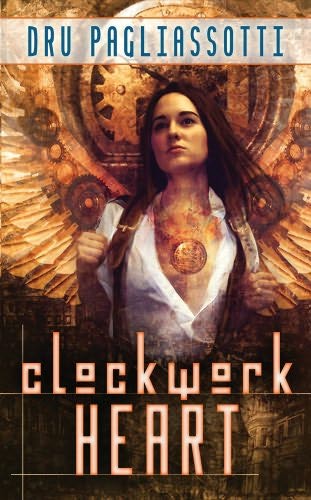
'Clockwork Heart' by Dru Pagliassotti

I bought this one after Michelle posted about it in her 'Mailbox Monday'. I'd recently read 'Soulless' by Gail Carriger and was ravenous for more Steampunk. Have yet to read a blog review of this book though.


Another book I read nothing but positive reviews of when it came out last year. I actually started reading this one a few months ago, but wasn't in the right 'Urban Fantasy' mood.


| More